
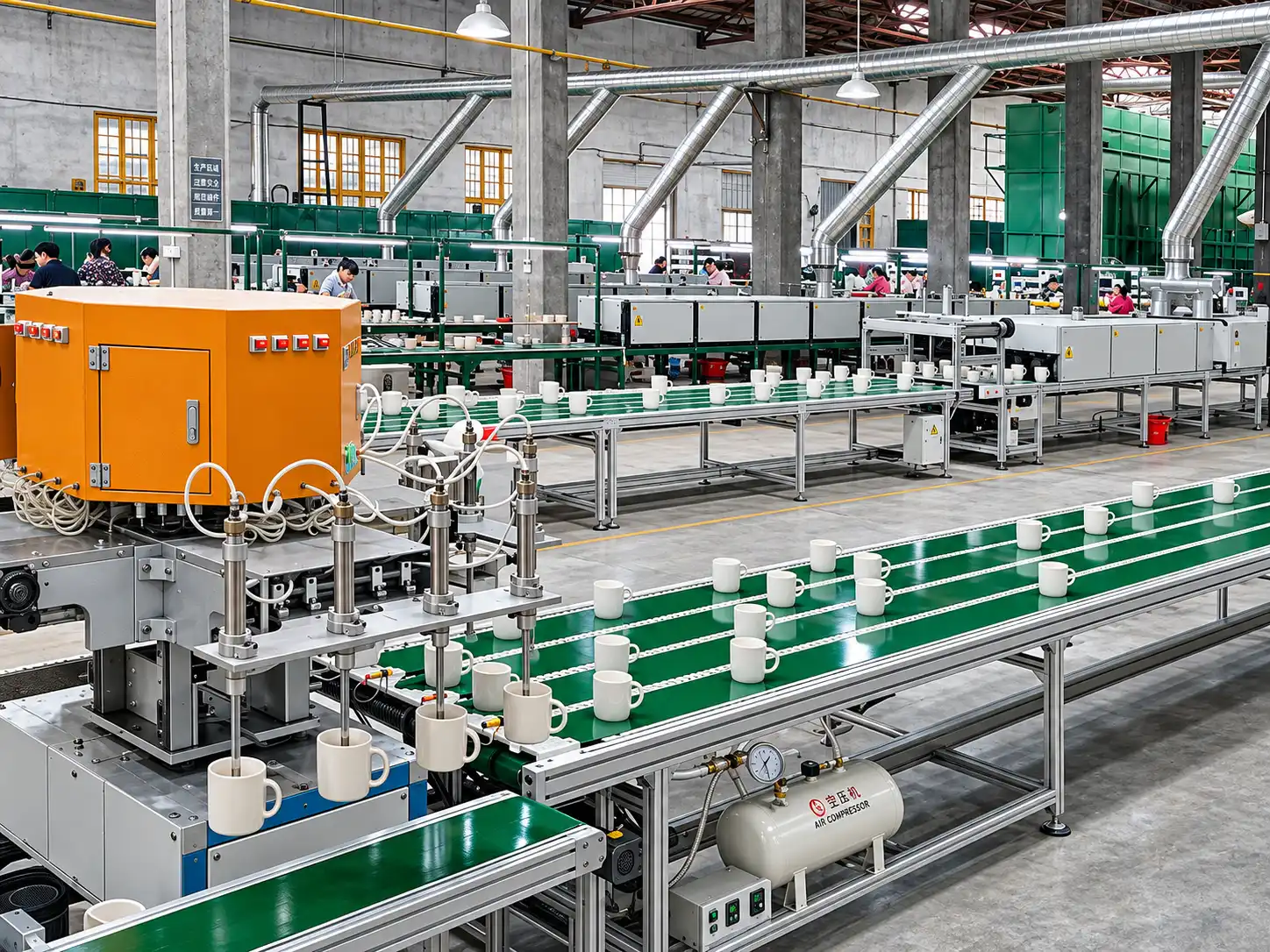
How Are Ceramic
Mugs Made?
Follow the process from clay preparation and cup forming to glazing, firing, decoration, and final inspection.
FROM CLAY TO FINISHED MUG
How Ceramic Mugs Are Made
Ceramic Mugs were among the first products we worked with at Mugbaby. Over the past 30 years, we've built long-term partnerships with ceramic factories in Hunan, Dehua, Shandong, and Chaozhou. Working with these suppliers has taught us how ceramic mugs are made, what defects to look for, and what each region does best. We're sharing what we've learned to help you choose the right mug and supplier.
The process has two parts: our partner factories make the ceramic mug bodies, and Mugbaby handles printing, decoration, inspection, and packing.
Ceramic Mug Body Production
Raw Materials
Clay, feldspar and quartz are mixed and milled
Forming
Slip casting or roller forming
Drying
Drying and trimming
Glazing
Glaze dipping or spraying
Ceramic Firing
High-temperature kiln firing (1,200°C-1,300°C)
Mugbaby Decoration & Finishing
Mug Body Sourcing
Selected ceramic mug bodies
Incoming Inspection
Shape, size and surface checks
Printing
Custom decal printing
Decal Application
Careful, accurate placement
Decal Firing
Firing temperature depends on the decal
Final Inspection
Appearance and function checks
Packing
Protective packaging for shipping
STAGE 1: MUG BODY PRODUCTION
How the Ceramic Mug Body Is Made
Our partner factories make the ceramic mug bodies. The exact method depends on the shape, material and order. Here are the main steps.
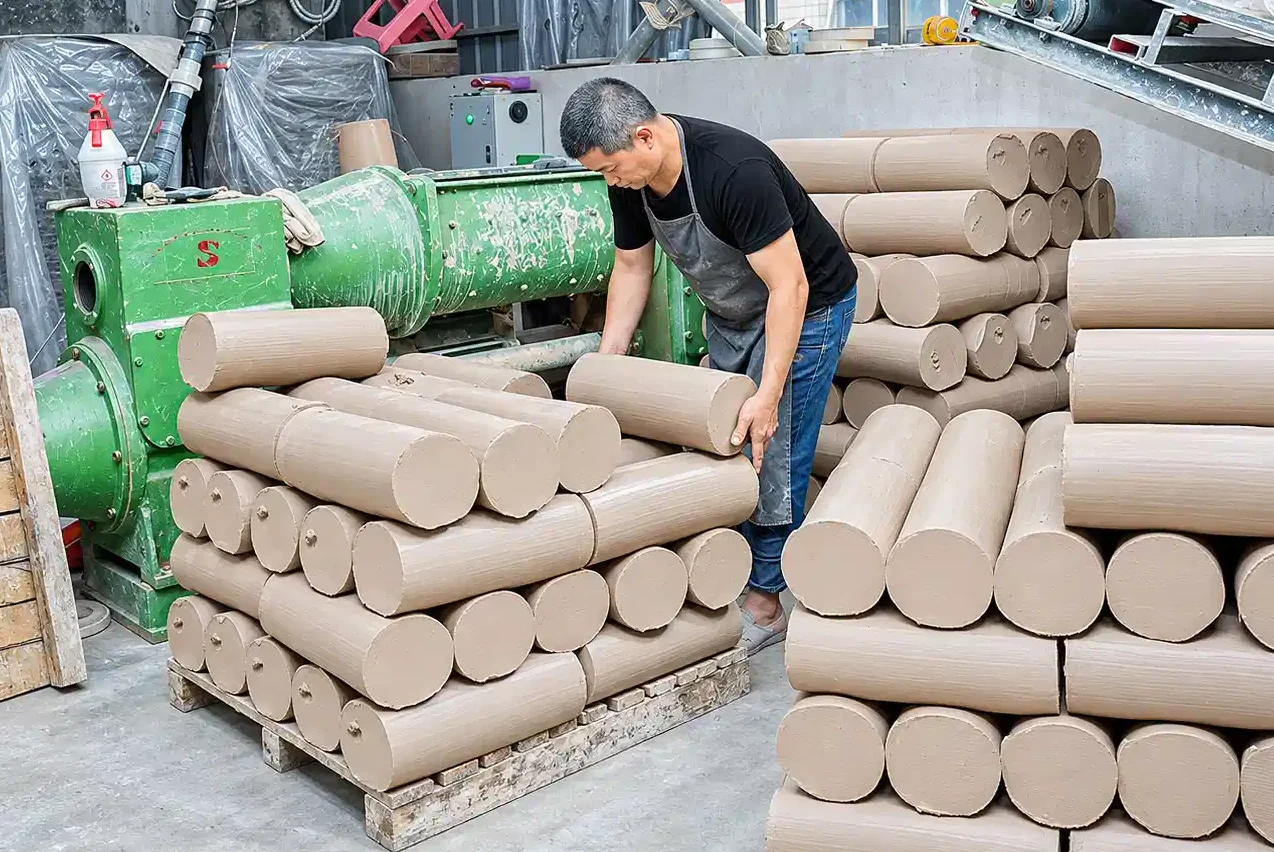
Preparing the Ceramic Clay
Kaolin, quartz and feldspar are measured and mixed to the required formula. The materials are milled with water, screened and passed through magnetic separators to remove iron. The slurry is then pressed into workable clay for forming.
- Magnetic separation helps reduce iron spots after firing
- Vacuum pugging helps remove air pockets from the clay
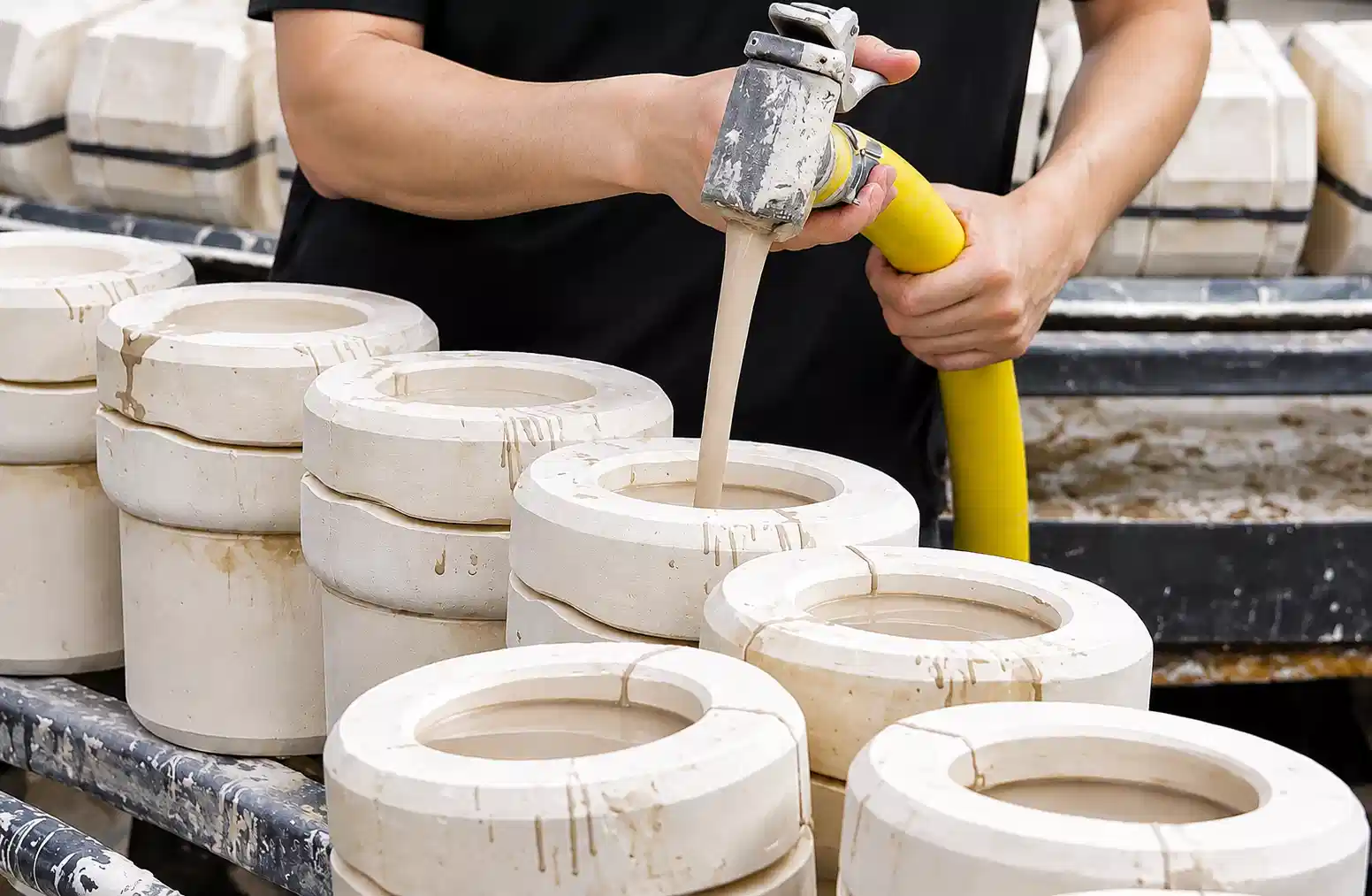
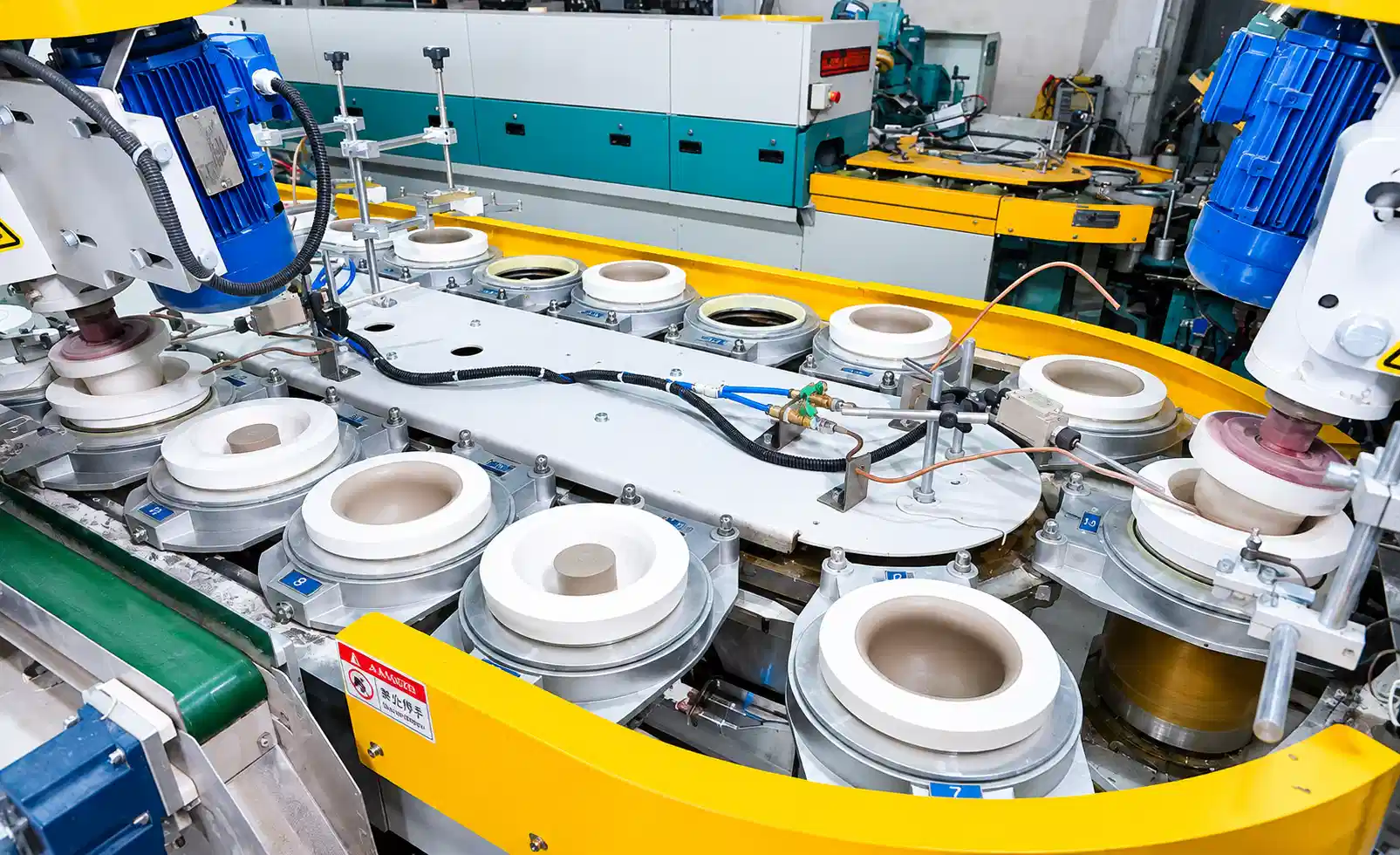
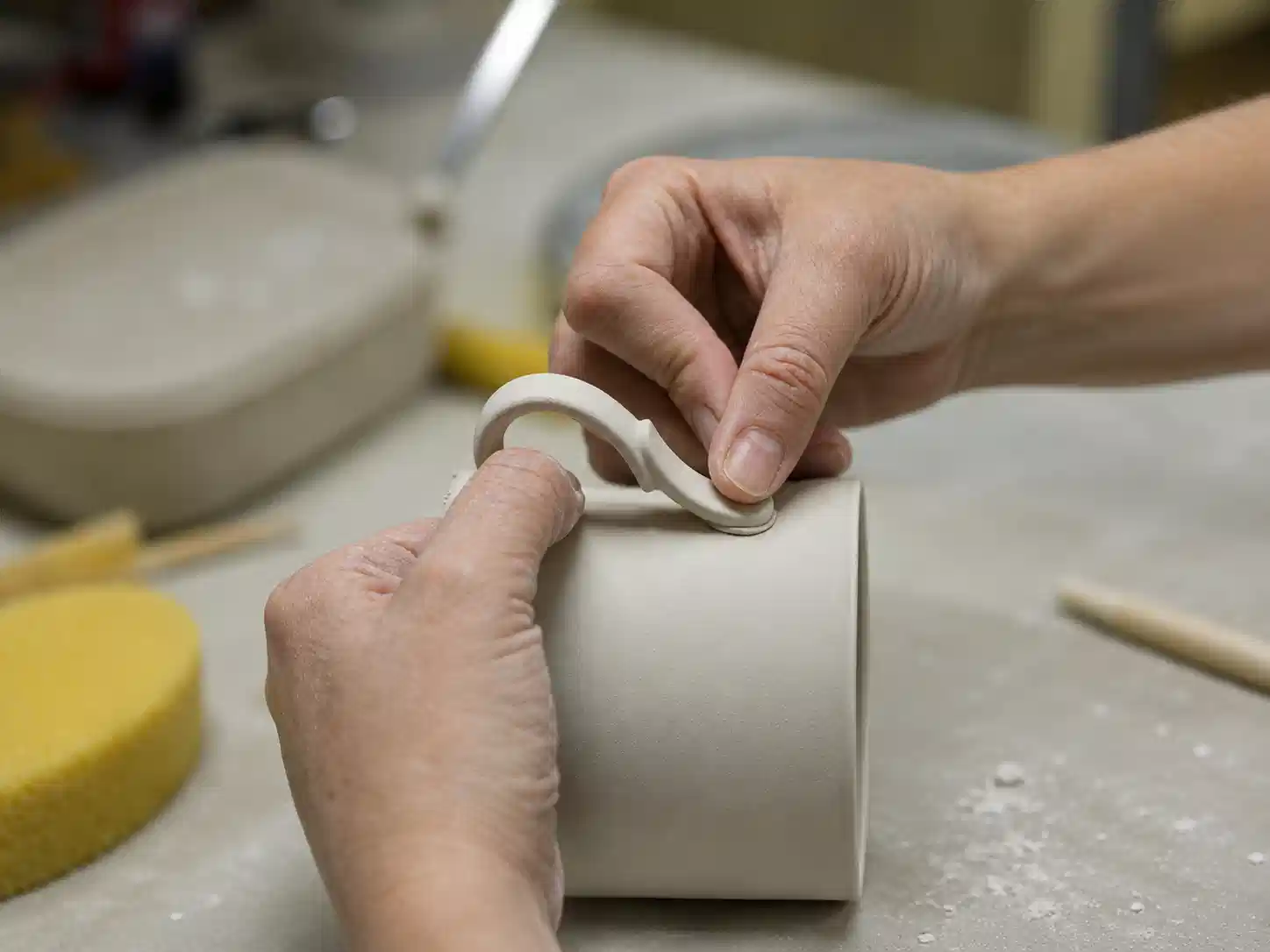
Mug Forming, Slip Casting & Handle Attachment
The forming method depends on the Mug design. Many standard mugs are made by roller forming, while more complex shapes may use slip casting. Handles are made separately and attached with clay slip while the mug body is still workable.
- Handle joints are checked to make sure they are secure
- Moulds allow for shrinkage during drying and firing
Drying and Trimming the Mug Body
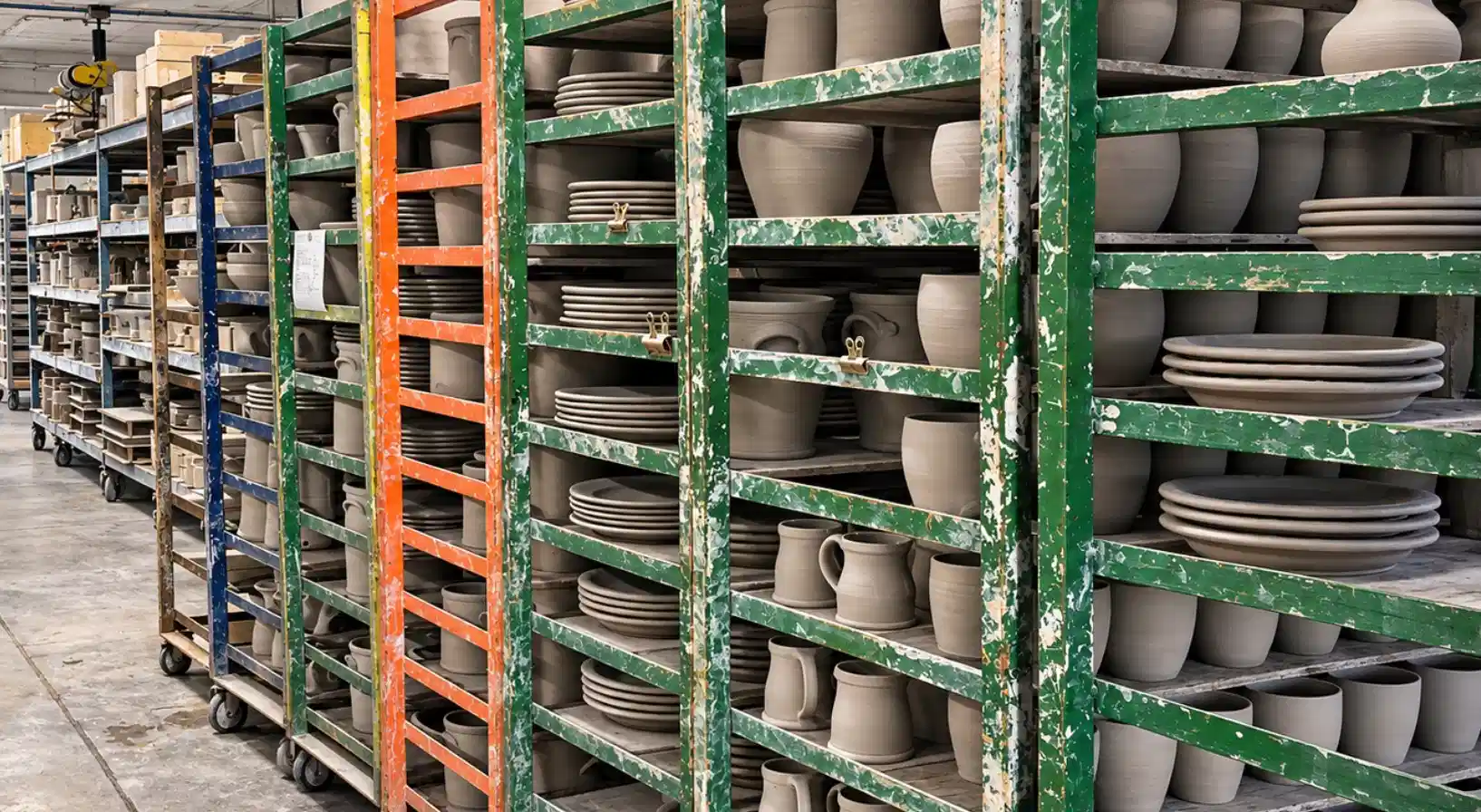
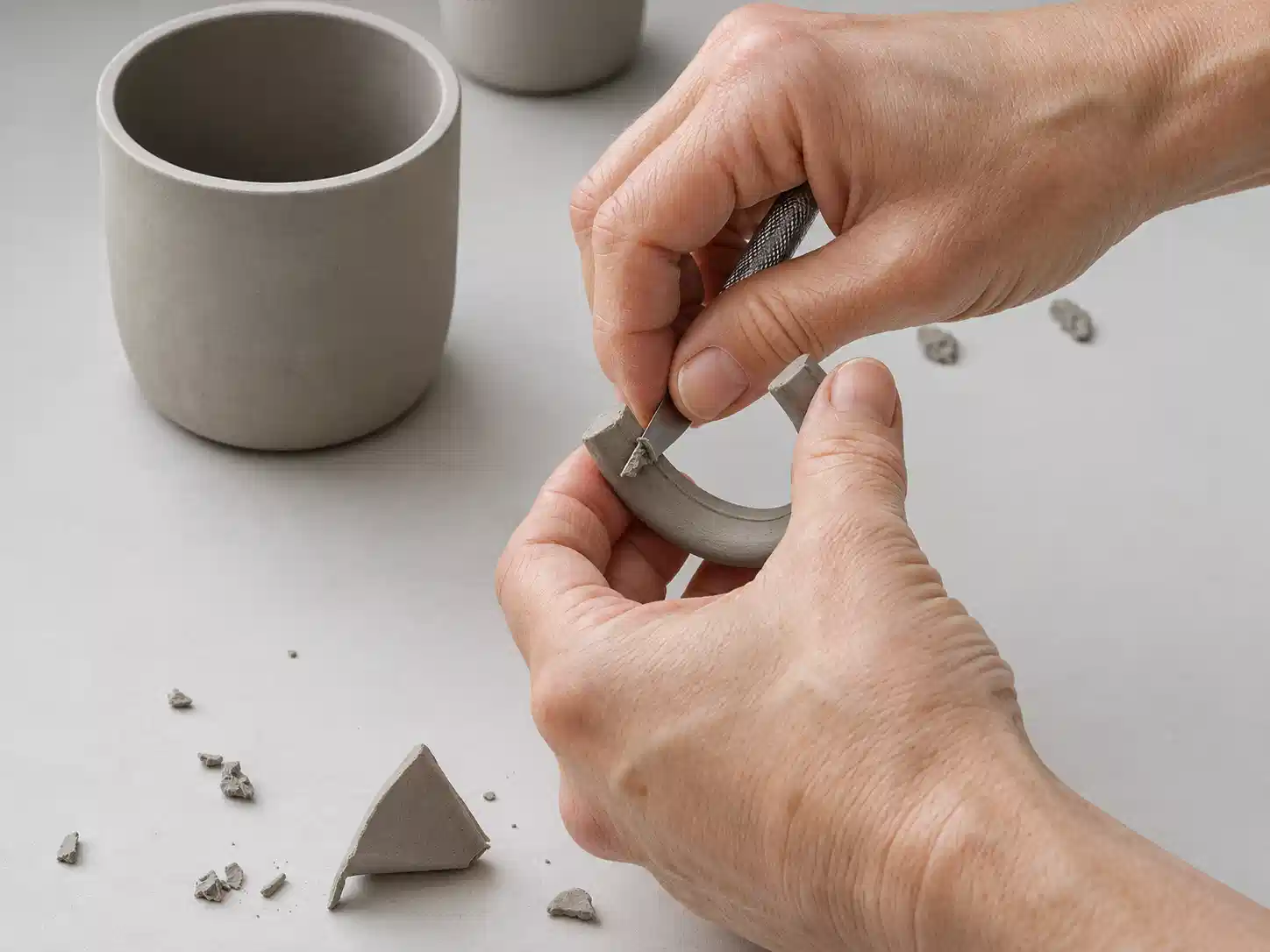
Freshly formed mugs still contain moisture, so they are dried gradually before the next step. Workers then trim the seams, smooth the rims and clean the surface to prepare each mug for glazing.
- Slow, even drying helps reduce warping and cracking
- Rims are checked for a smooth, even finish
Applying the Glaze
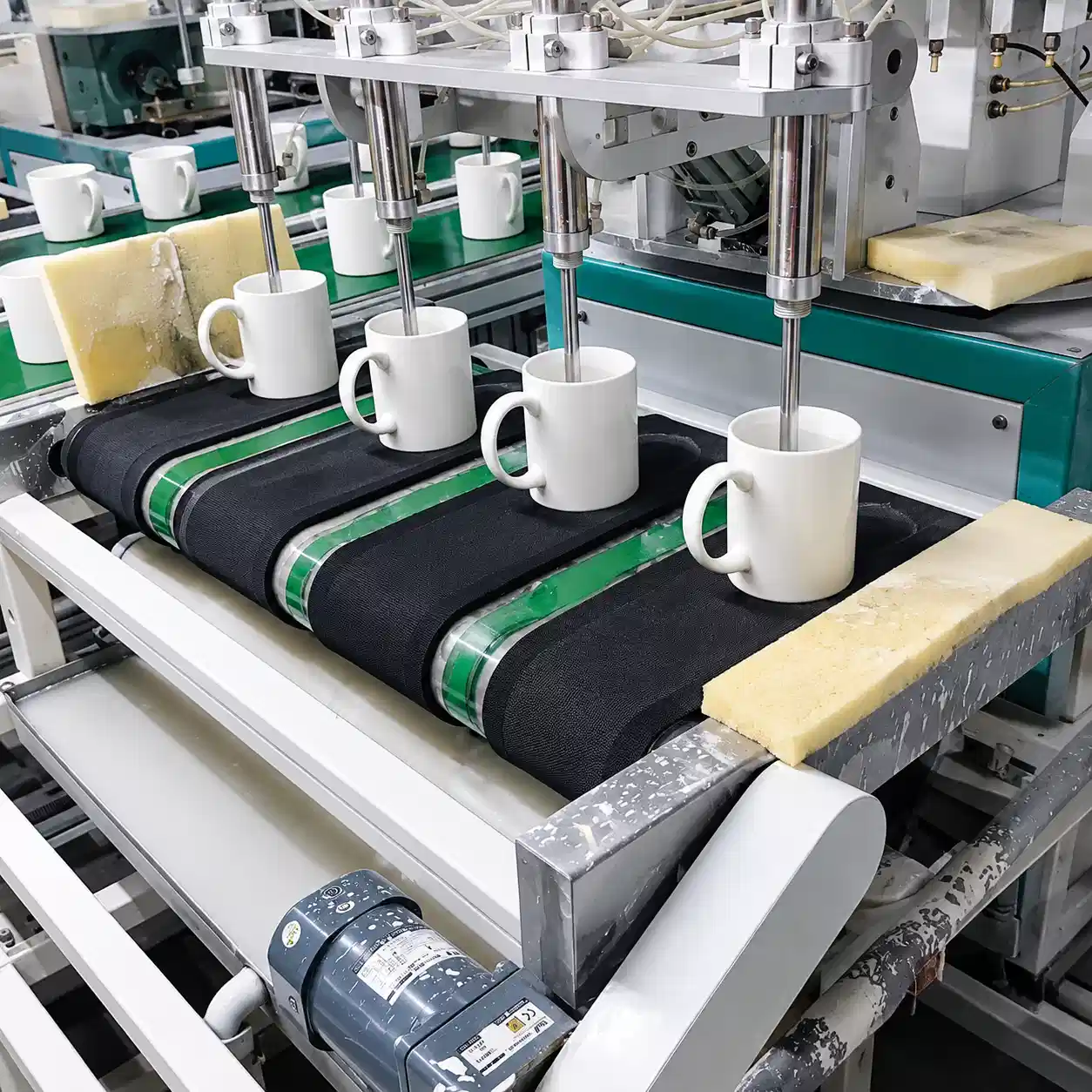
The dry mug body is dipped, sprayed or coated with glaze. The glaze gives the mug its final surface, whether glossy, matte or colored. The bottom foot is cleaned so the mug won't stick to the kiln shelf during firing.
- Glaze thickness and consistency affect the final finish
- Different glaze formulas create different colors and textures
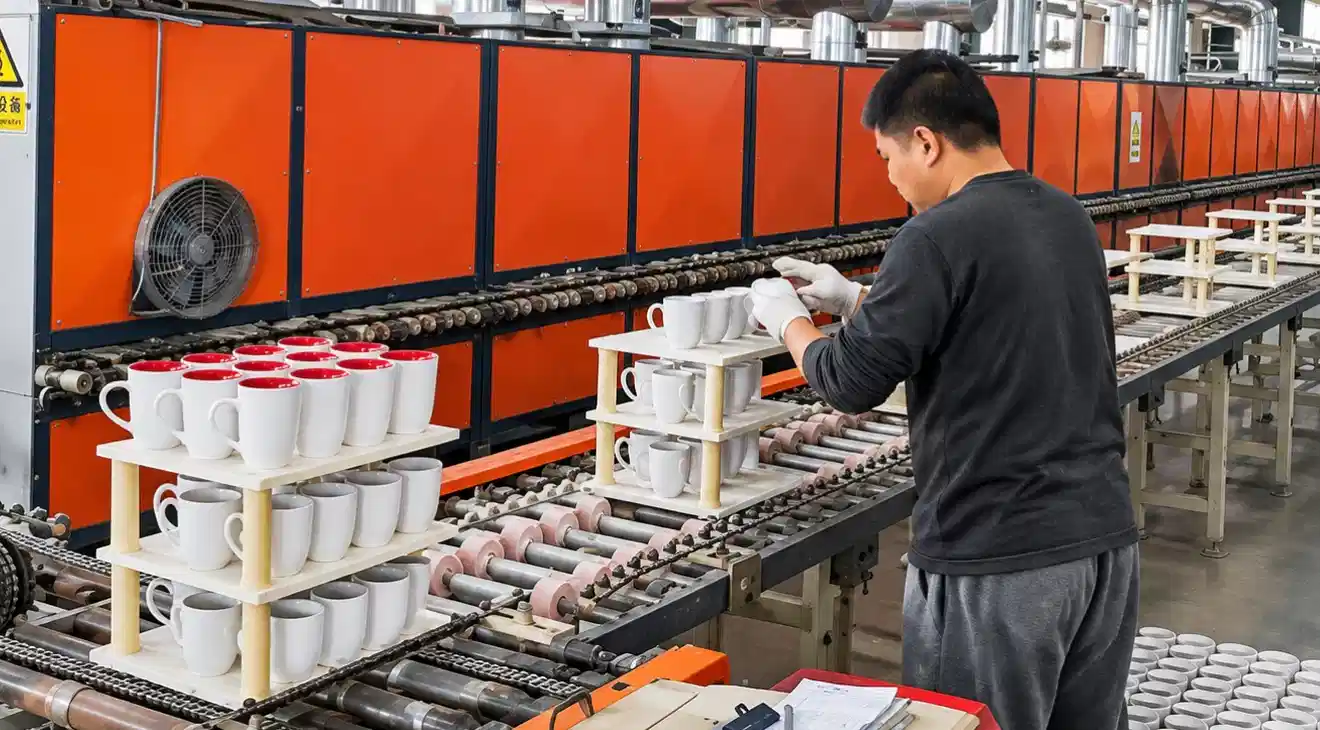
High-Temperature Firing (1,200°C-1,300°C)
The glazed mugs are loaded into a kiln and fired at high temperature. This hardens the ceramic body and melts the glaze into a smooth, durable surface. The firing schedule depends on the clay body and glaze.
STAGE 2: MUGBABY CUSTOMIZATION
From Plain Mugs to Your Custom Design
Once the mug bodies arrive at Mugbaby, we check them, print your artwork, apply the decals, fire the design, inspect the finished mugs and pack them for delivery.

Mug Body Sourcing
We source mug bodies through our long-term ceramic partners. Based on your project, we select porcelain, stoneware or new bone china, along with the right shape, size and surface for decoration.
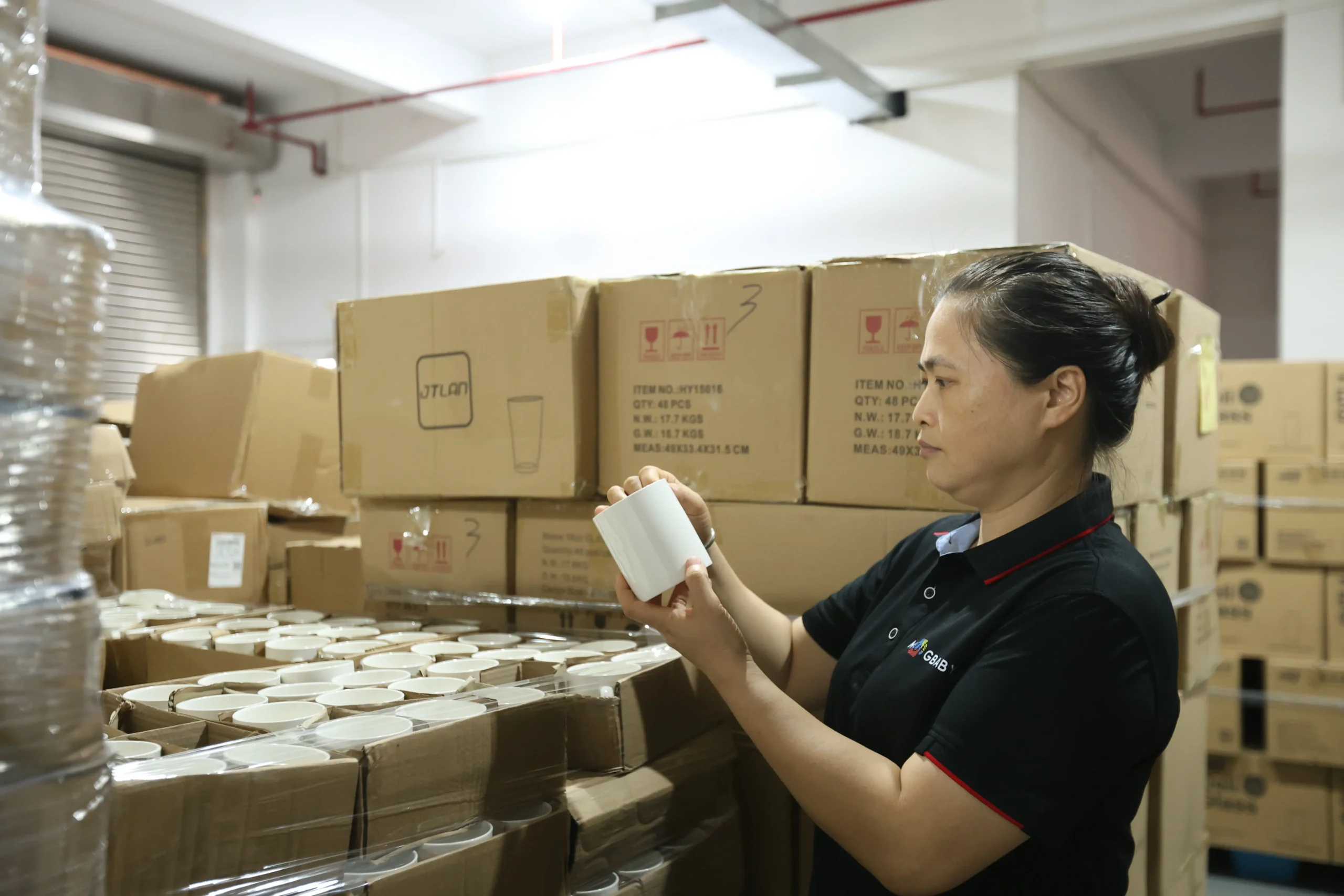
Incoming Quality Check
When the mugs arrive, we check their shape, dimensions and glaze. We look for common issues such as pinholes, black spots, uneven rims and other surface defects. mugs that don't meet the agreed standard are set aside before printing.
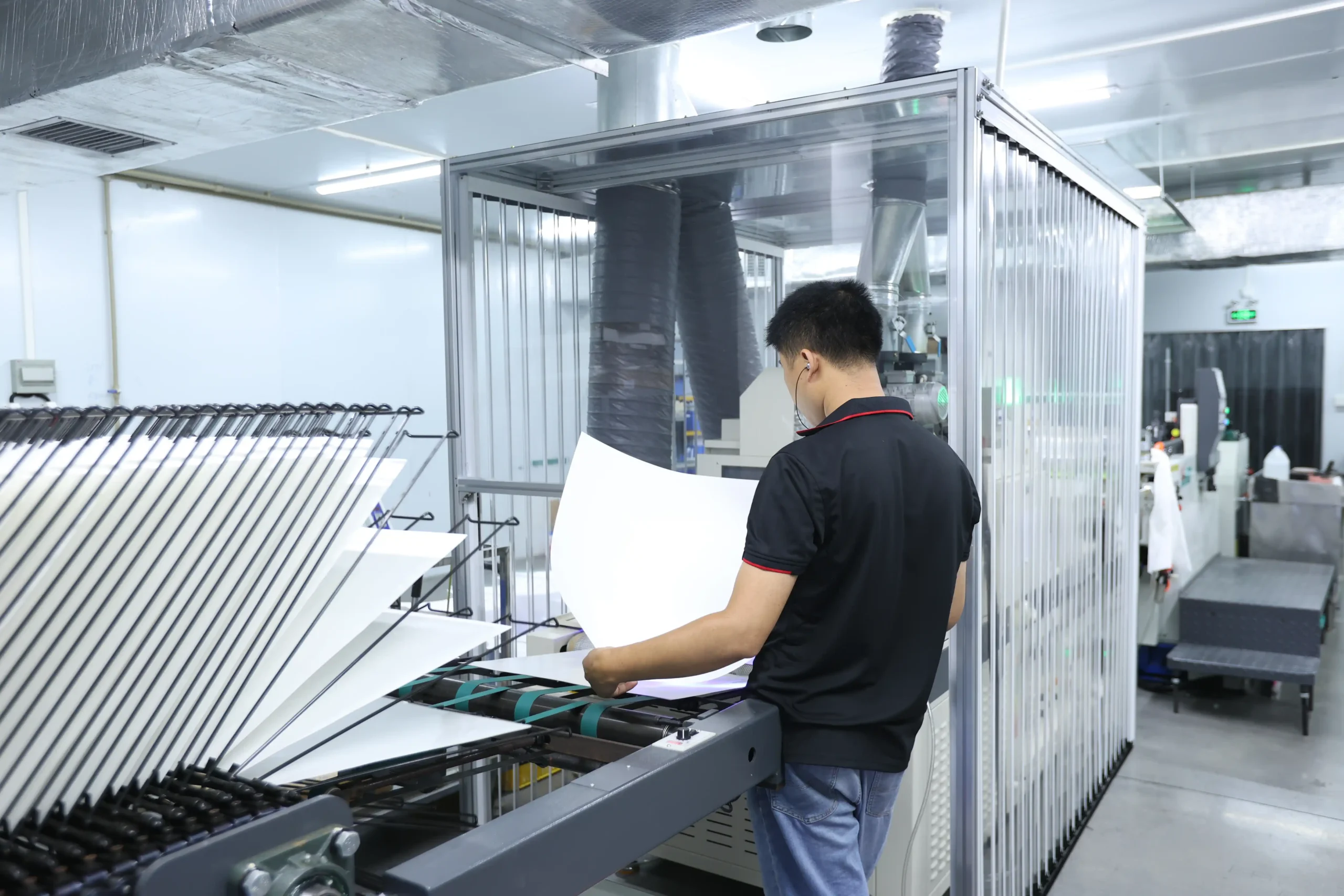
Decal Printing
We print your artwork onto water-slide decal paper using screen printing and other suitable methods. Depending on the design, we can prepare standard colors, special effects and thermochromic inks.
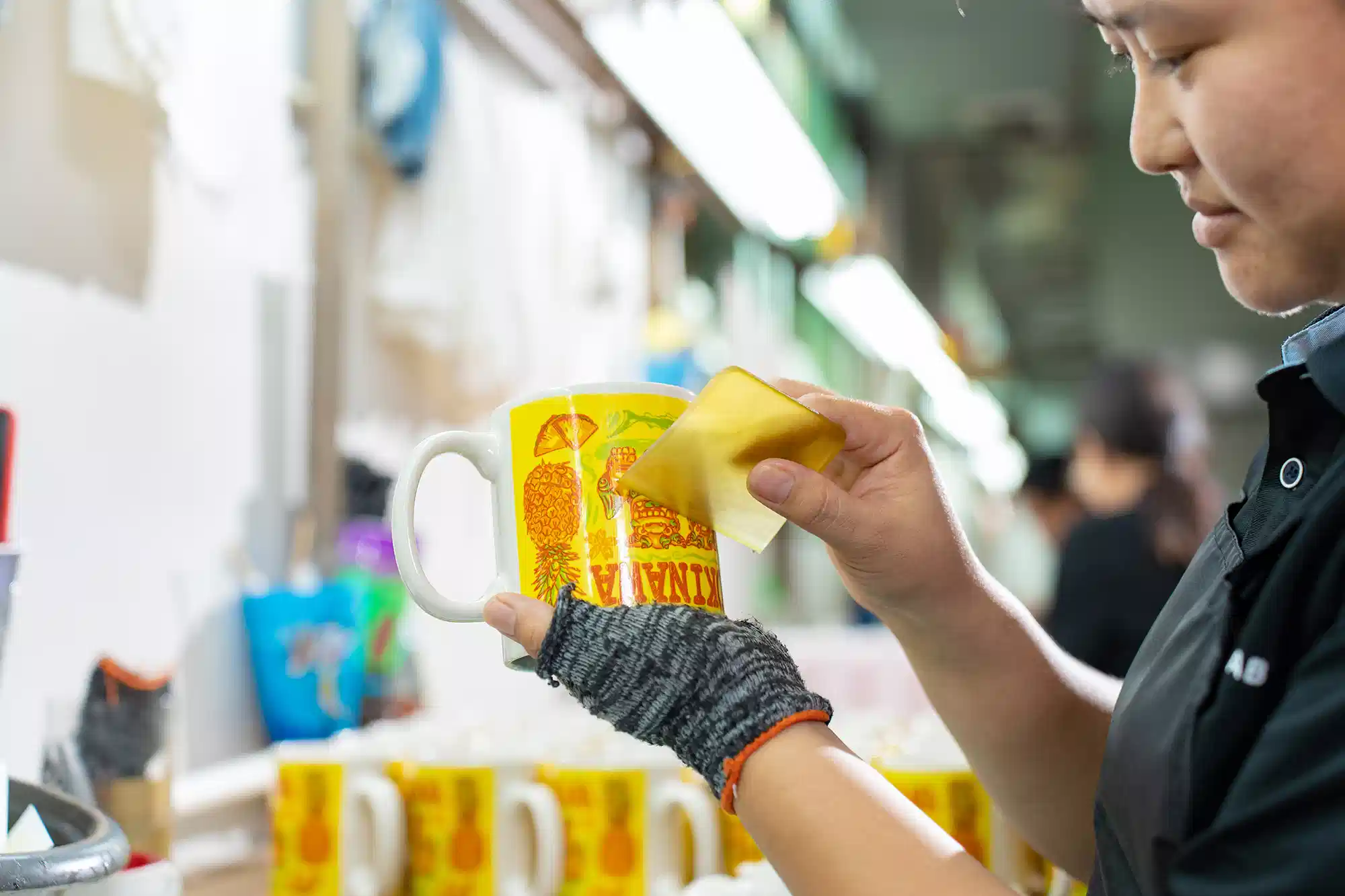
Applying the Decals
Each printed decal is soaked in water, positioned on the mug and carefully smoothed by hand. We remove excess water and air to help the decal sit flat on the surface.
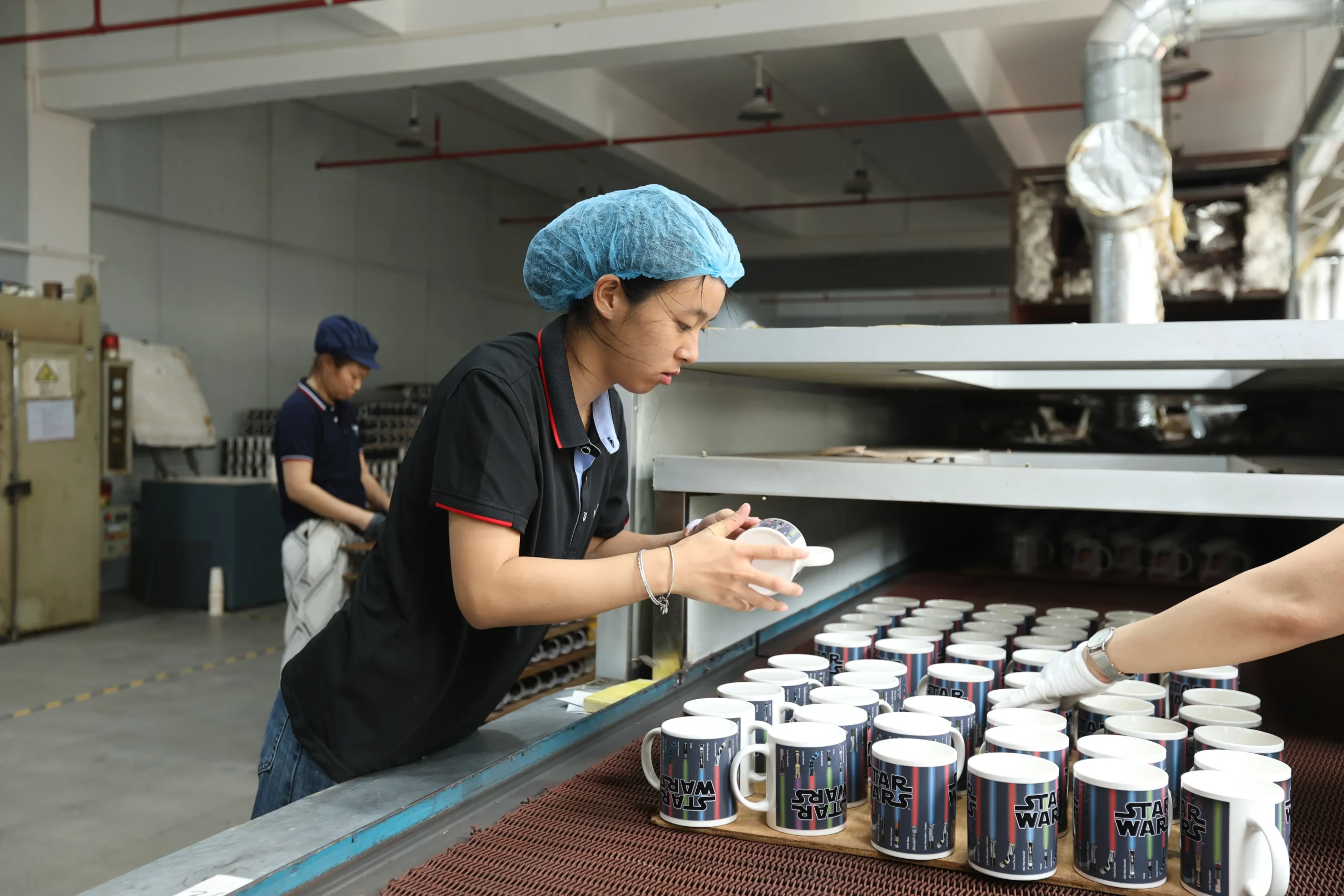
Decal Firing
The firing temperature depends on the decal. Standard ceramic decals are fired at high temperatures, while low-temperature decals are processed at lower temperatures to protect special inks, including thermochromic inks. This step fixes the design onto the mug.
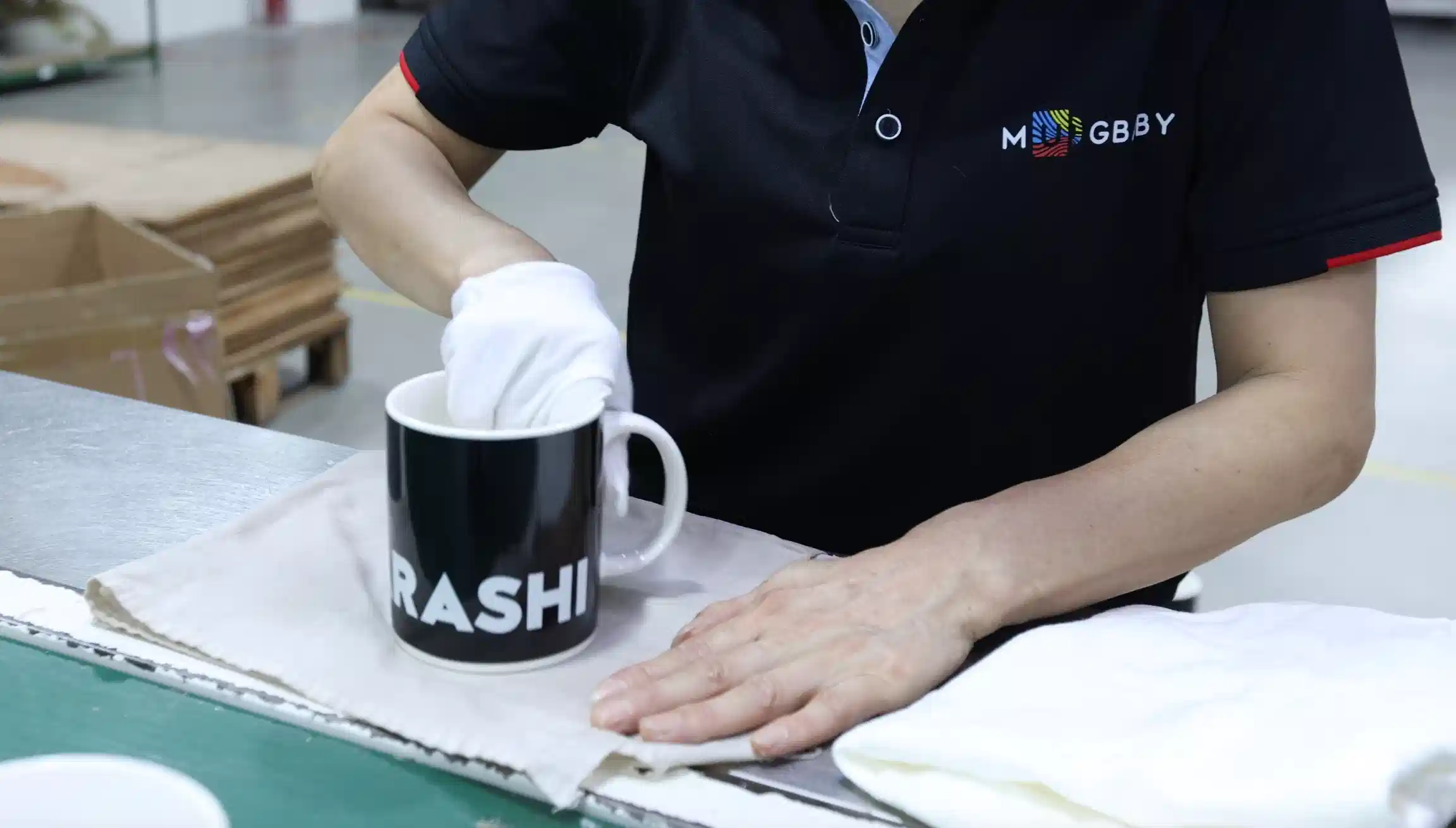
Final Inspection
We check each finished mug for print alignment, color, surface defects and overall appearance. For color-changing designs, we also test samples with hot water to make sure the effect works as expected.
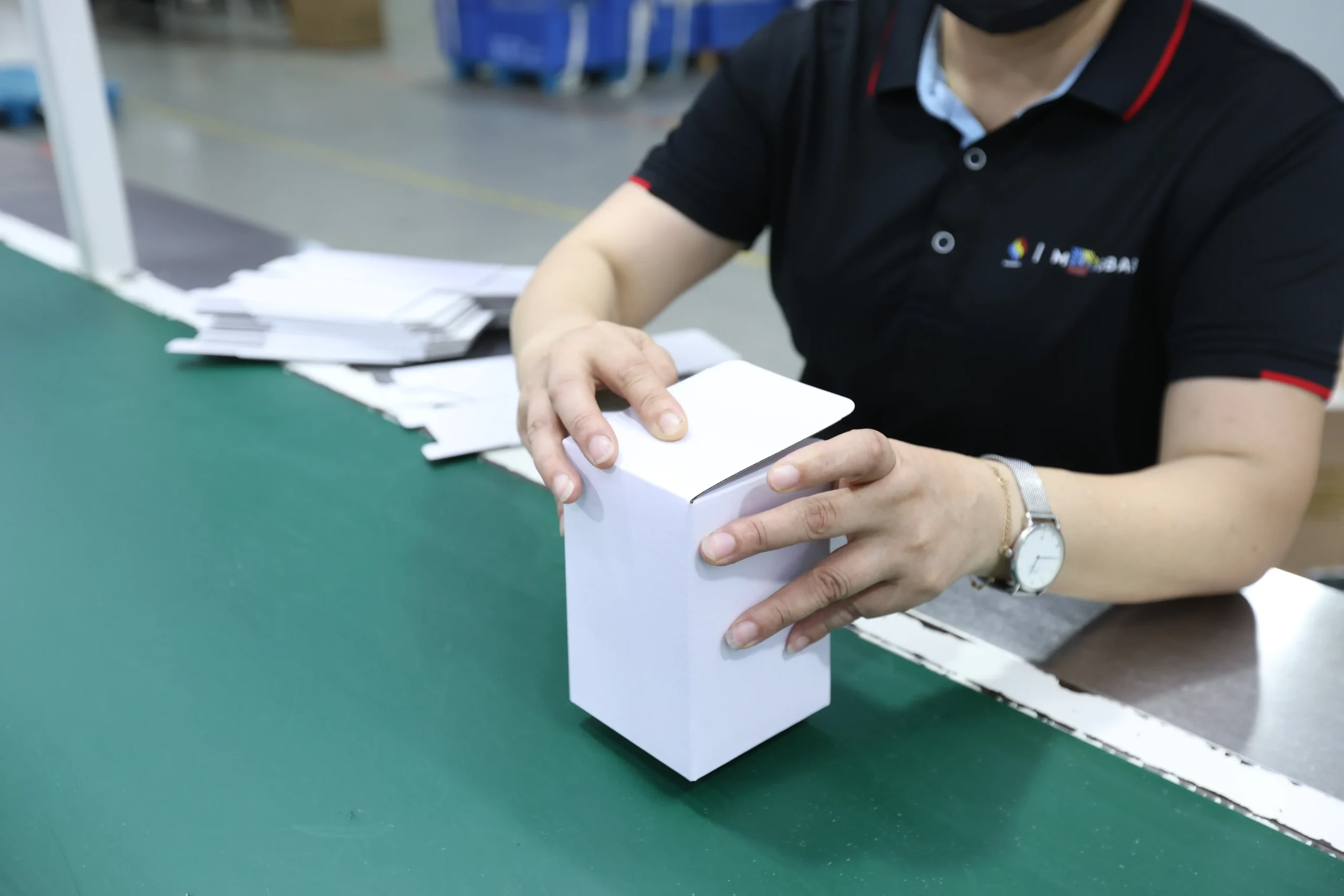
Packing for Delivery
We pack the mugs in your chosen gift boxes or shipping cartons, using dividers and protective materials to reduce the risk of damage in transit. We also check the labels and cartons before the goods leave.
QUALITY CHECKS AT EVERY STAGE
What We Check Before Your mugs Ship
We check the ceramic mugs when they arrive, then inspect the printing, decal finish and packed products before shipment. Here are some of the things we look for.
Incoming mug Inspection
When mug bodies arrive from our partner factories, we check:
- ✓ Rims sit flat without excessive wobble
- ✓ Glaze surface for pinholes and iron spots
- ✓ Handle joints for cracks or weak bonding
Decal Print Check
Before the decals are applied, we check:
- ✓ Color and print alignment
- ✓ Color consistency across the printed sheets
- ✓ Thermochromic ink coverage and appearance
Decal Application & Firing
After application and firing, we check:
- ✓ Bubbles, lifted edges and burn marks
- ✓ Decal adhesion, using the agreed test method
- ✓ Even color and finish across the design
Finished mug & Packaging
Before the order is packed, we check:
- ✓ mug surfaces and printed designs are clean
- ✓ Wash and abrasion resistance, when required
- ✓ Carton strength and drop-test results, when required
SHAPES, COLORS & FINISHES
Make the Ceramic Mug Your Own
Choose a mug shape, glaze, material and print style that fits your brand. We can help you compare the options and find a practical way to bring your design to life.
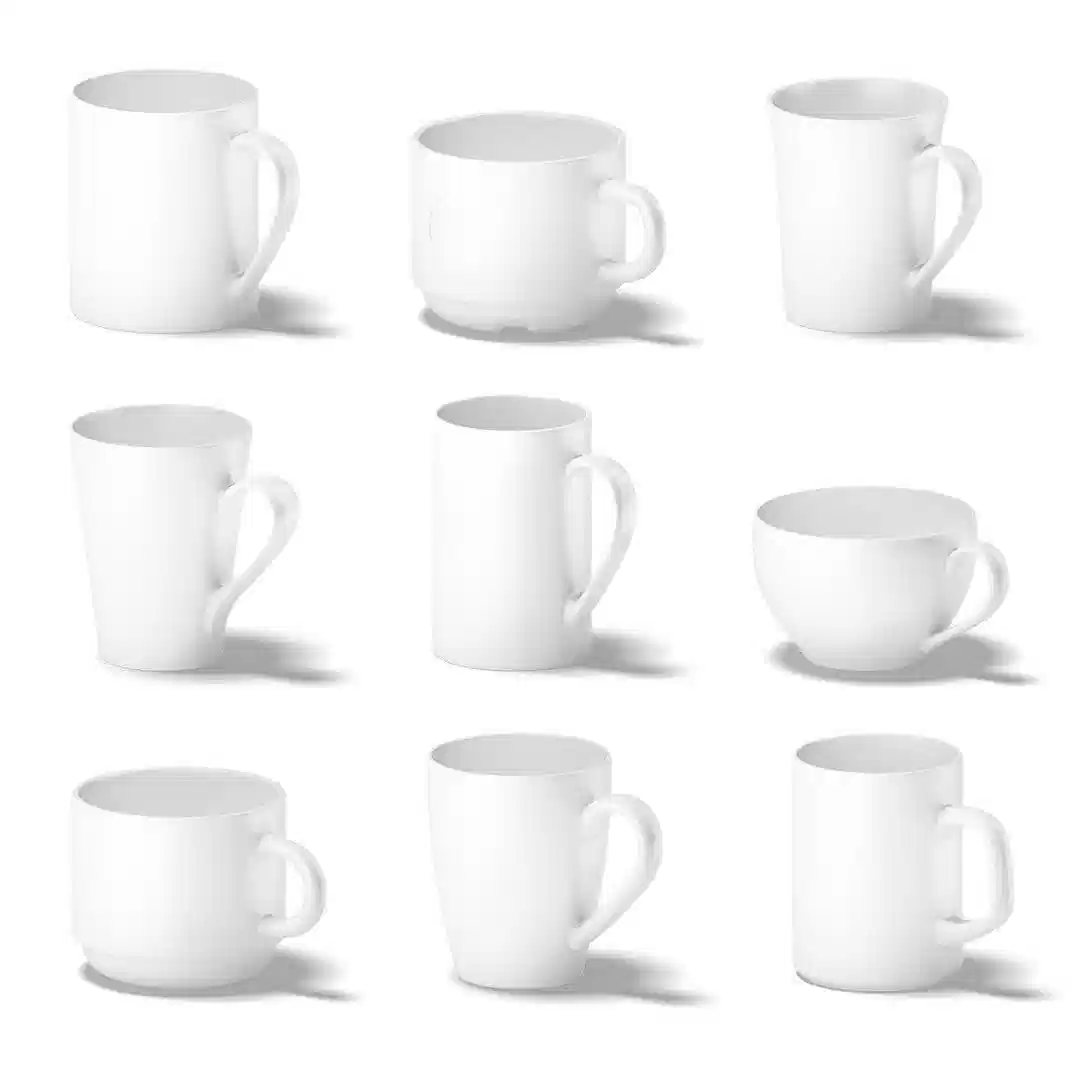
Different mug Shapes
From classic straight-sided mugs to tapered mugs, wide bowls and other shapes, there are plenty of options. We'll help you choose one that suits your design and how the mug will be used.
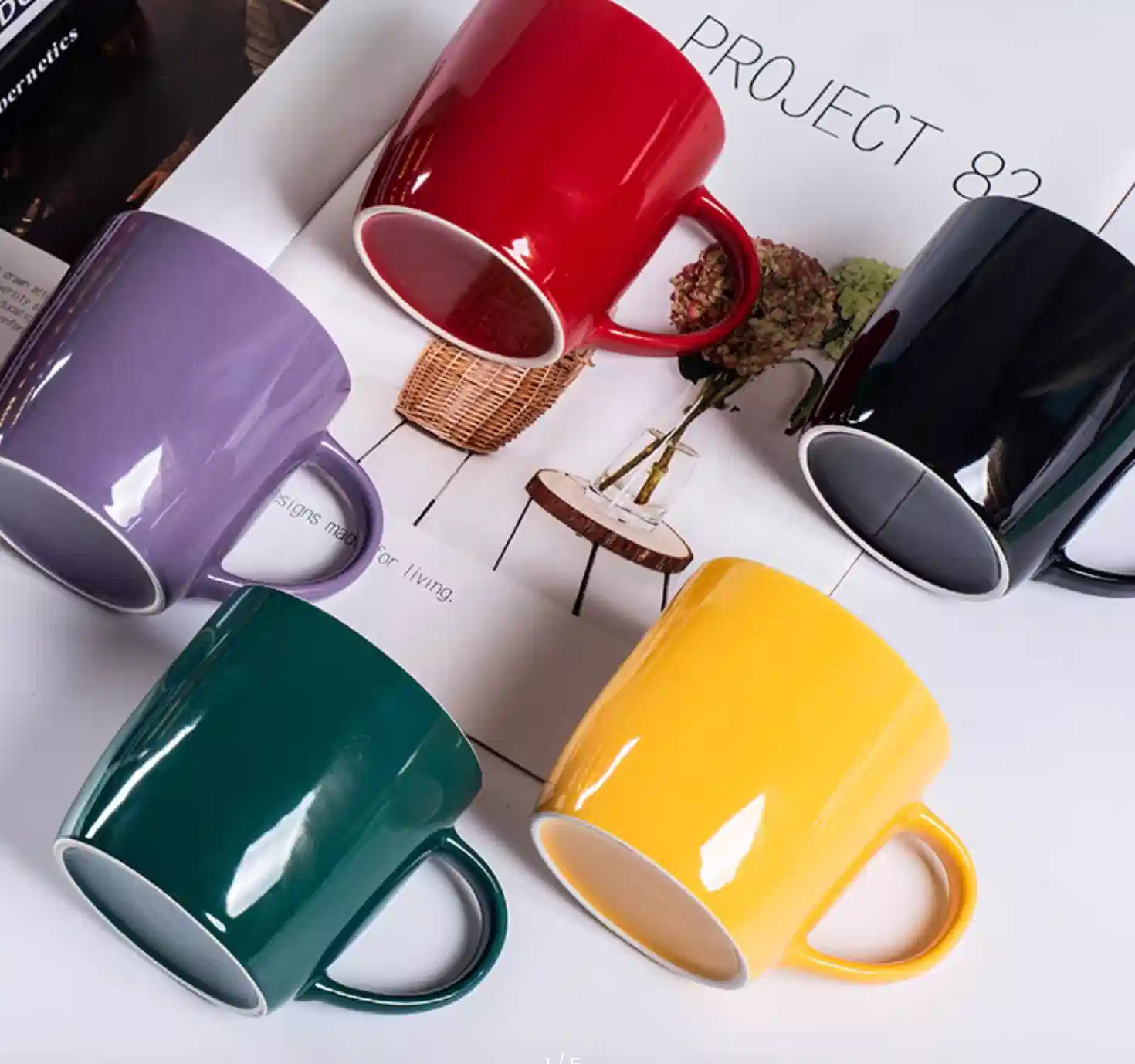
Colors & Glaze Finishes
Choose from glossy, matte, two-tone or textured glazes. We can also work toward your brand colors, depending on the glaze and ceramic body.

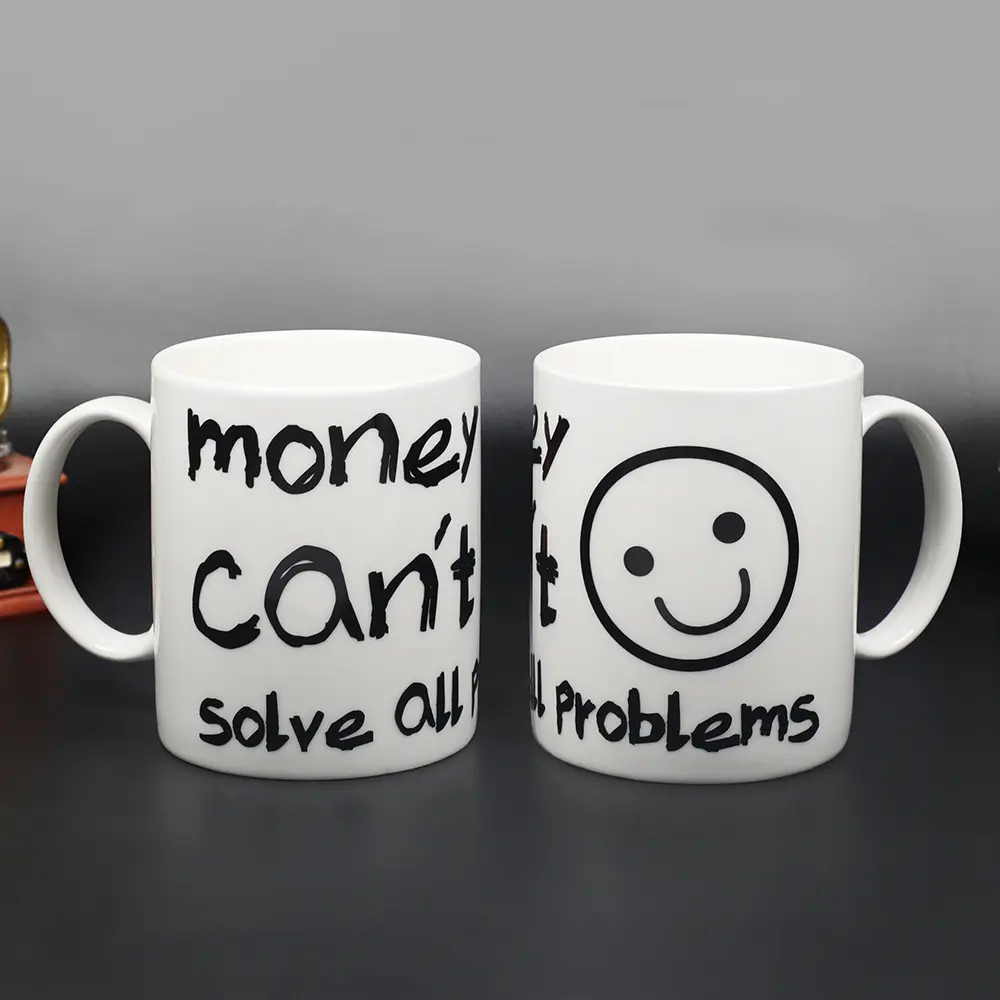
Custom Printed Designs
Add artwork around the mug, inside the rim, on the handle or on the base. The best print method depends on your design, coverage and order quantity.
New Bone China Mugs
New bone china has a fine, light look and can be made with thinner walls. It's a good option for premium mugs and gift sets. We can help you compare it with porcelain and stoneware.
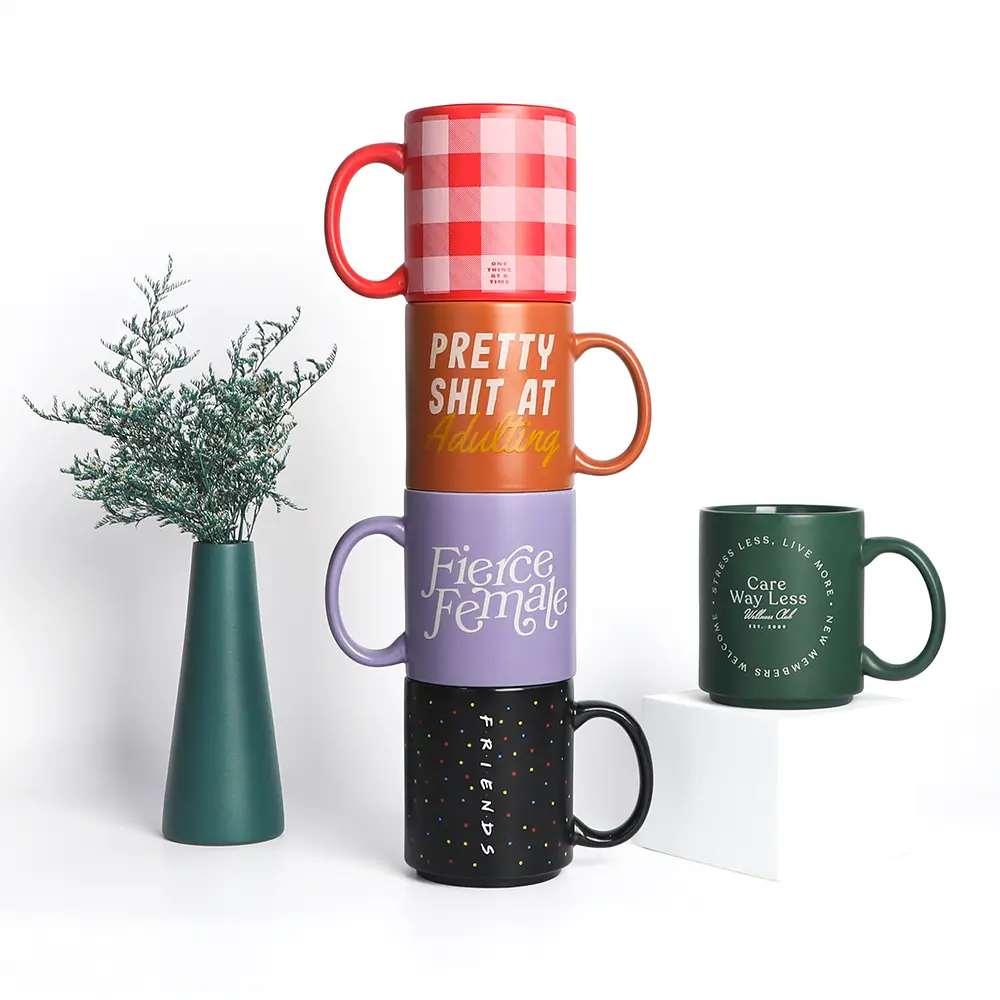
Stackable Ceramic mugs
Stackable shapes help save shelf and storage space. They can be useful for cafés, retail sets and kitchens where storage matters.
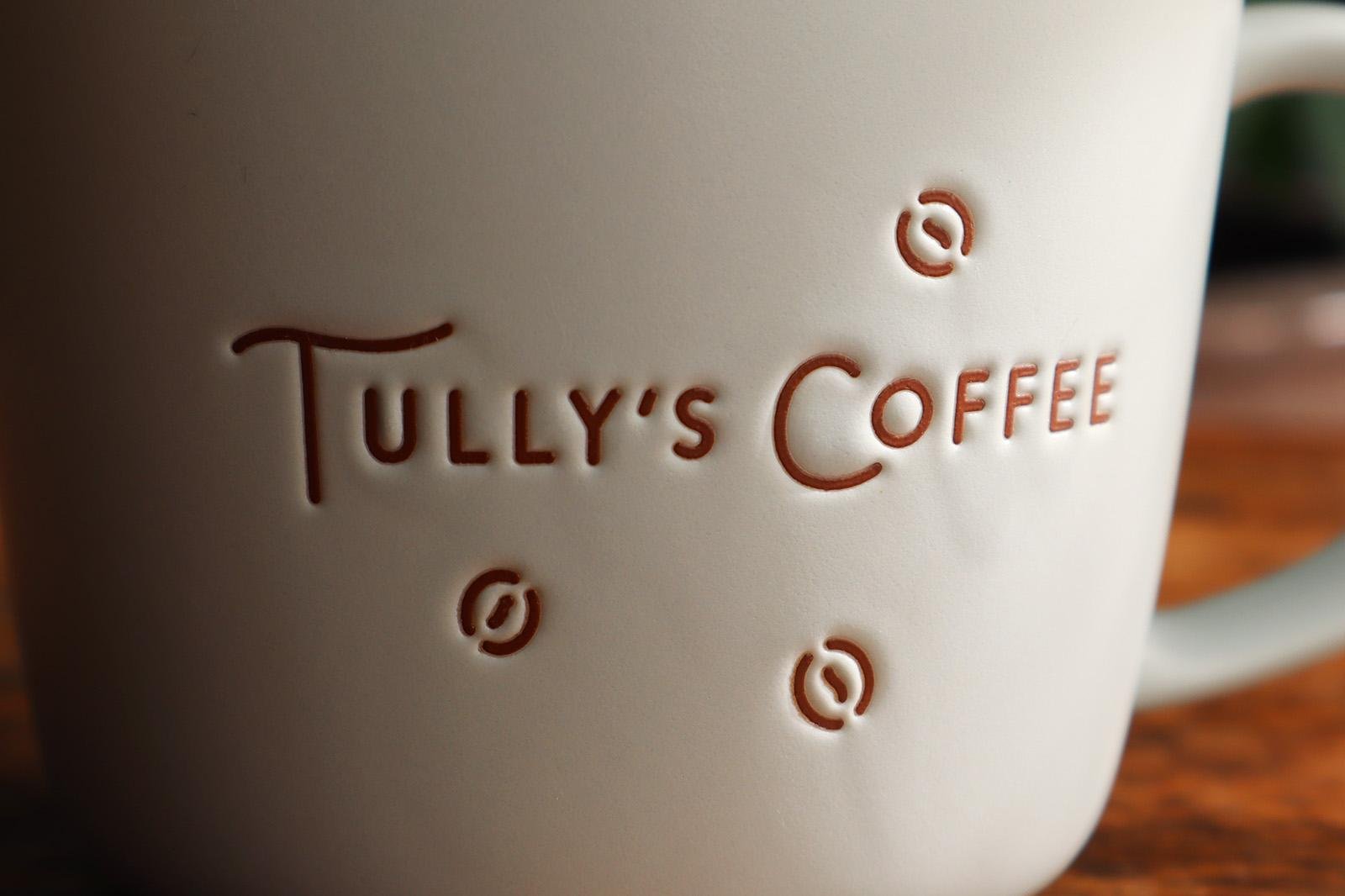
Decorative Effects
For something different, consider gold foil, raised or recessed details, glitter finishes or glow-in-the-dark accents. We'll help you check which effects suit the mug and your artwork.
Add a Color-Changing Effect to Your Ceramic mug
A ceramic mug doesn't have to stay the same color. With thermochromic inks, parts of the design can appear, disappear or change when the mug gets hot or cold.
We combine ceramic mugs with our printing and color-changing experience to create products for brand campaigns, promotions and retail collections.
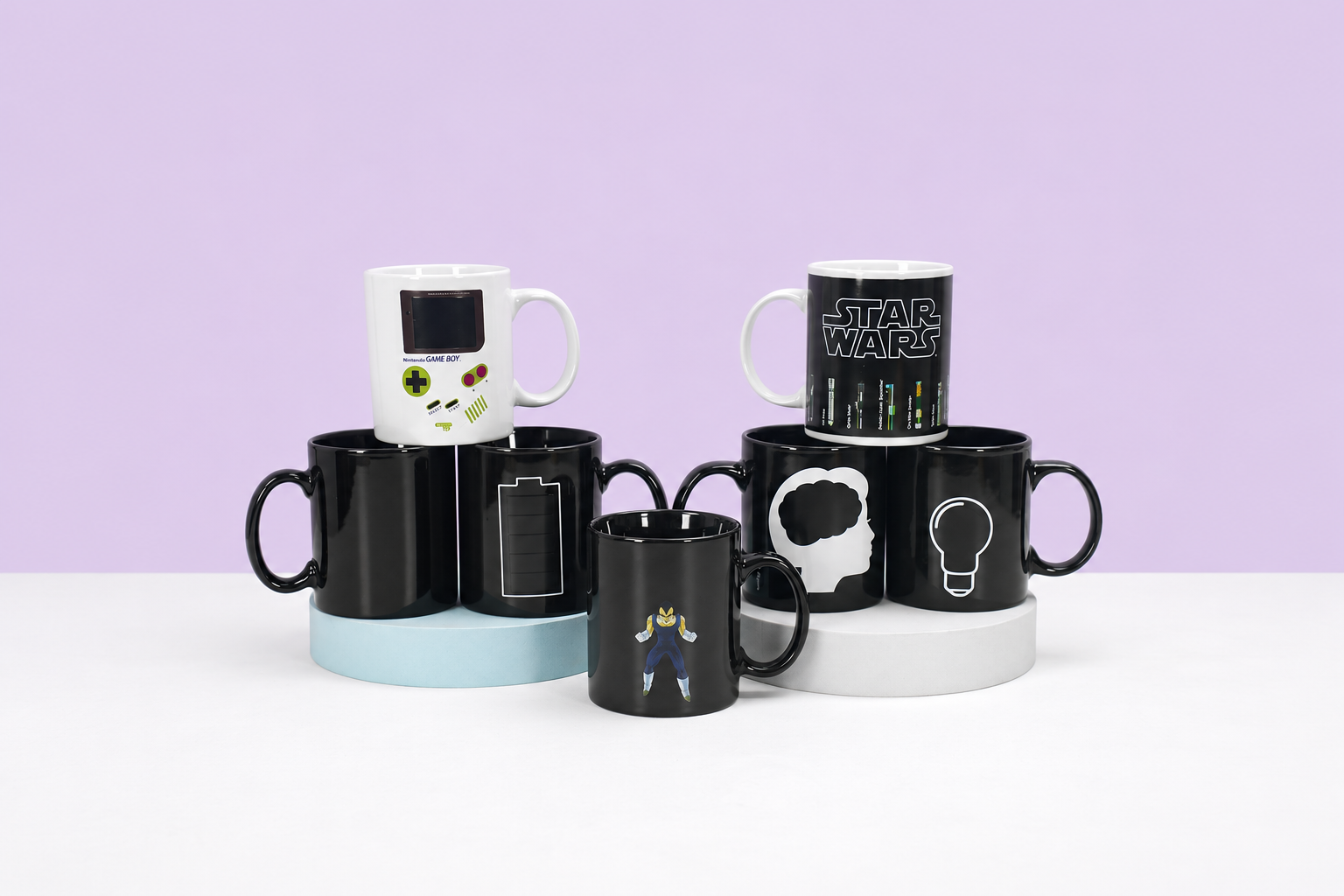
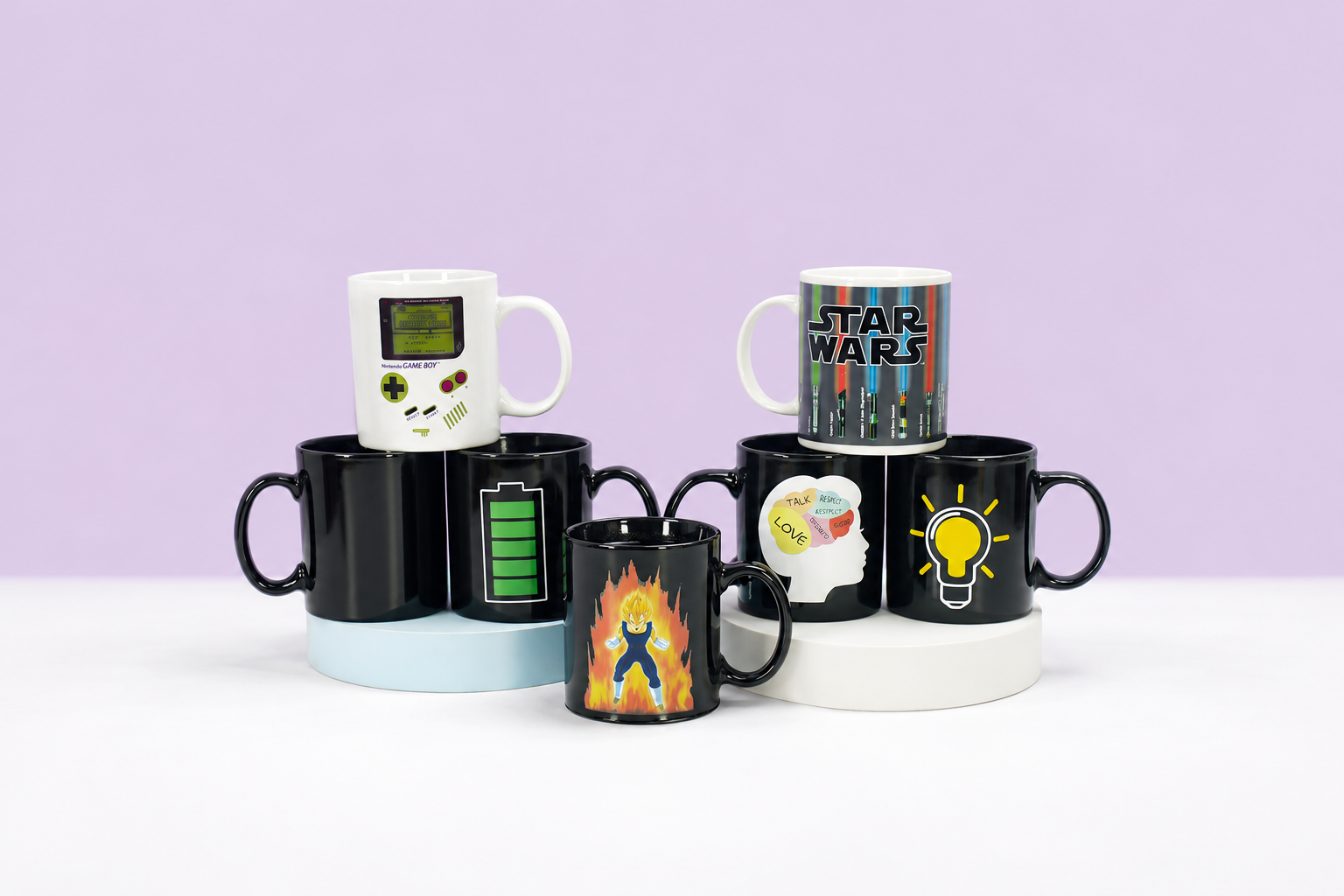
A dark layer fades when hot water is added, revealing a logo, message or full-color design underneath.
Thermochromic inks can shift from one color to another as the temperature changes. The exact effect depends on the ink and design.
We apply the color-changing effect to the outside of the mug. The right ink and firing process depend on how you plan to use and care for the product.
COMMON QUESTIONS
Ceramic Mug Manufacturing FAQs
A few things buyers often ask before starting a ceramic mug project.
How Are Ceramic Cups Made?
1. Blank Production: The process begins with preparing the clay, followed by forming, drying, glazing, and firing the cup body.
2. Decoration & Fulfillment: Once the ceramic blank is ready, it goes through printing, decoration, quality inspection, and packing.
Where Are Mugbaby's Ceramic Cup Bodies Made?
Partner Factories: Cup bodies are produced at our long-term ceramic factory partners in Hunan, Dehua, Shandong, and Chaozhou.
Mugbaby's Role: We handle sourcing, custom printing, decoration, inspection, and packing to keep quality consistent.
What's the Difference Between Ceramic Firing and Decal Firing?
Ceramic Firing (Before Printing): Hardens the cup body and melts the glaze securely into place to form the finished blank.
Decal Firing (After Design Application): Bonds the applied artwork to the glazed surface. Firing temperatures depend on the decal type:
- Conventional ceramic decals: Typically fired at around 750°C-800°C.
- Low-temperature decals (special inks): Processed at around 180°C-220°C.
Can I Customize the Shape, Color and Design?
Yes. Depending on the selected cup body and order quantity, you can customize multiple elements:
- Cup & Surface: Different shapes, glaze colors, and surface finishes.
- Branding & Packaging: Printed artwork, foil details, and custom packaging.
Next Step: Send us your design, and we will help you work out the most practical production options.
Can Ceramic Cups Have Color-Changing Effects?
Yes. We apply thermochromic inks designed to respond to temperature changes.
How It Works: For example, a dark outer layer turns lighter or transparent when hot water is added, revealing the artwork printed underneath.
Effect Options: Both the activation temperature and the final visual effect depend on the specific ink selected.
Have a ceramic cup idea? Let's talk.
Tell us what you want to make. Share the cup shape, material, artwork, quantity and timing if you know them. We'll review the details and get back to you with practical next steps.
Check the Design and Process
We'll review the cup material, print method and special effects to see what will work for your project.
Sample Approval
We'll prepare a sample for you to review before moving into mass production.
Production Planning
We'll agree on key dates and keep you updated as your order moves forward.
We treat your artwork and project details with care. If you need an NDA, just let us know.