
In-Mold
Labeling
Technology
Since 2000, Mugbaby has pioneered one-piece molded plastic cups to improve efficiency, reduce labor costs, and overcome traditional printing limitations. This led to the development of Mugbaby’s own in-mold labeling (IML) technology, enabling full-wrap designs and easier color-changing production.
01 / Understanding IML
What Is In-Mold Labeling (IML)?
How IML Works
01 / How It WorksUnlike conventional printing or decoration applied after molding, IML places a pre-printed polypropylene (PP) film inside the mold before injection. As molten plastic fills the mold, it bonds with the printed film, making the design an integrated part of the cup surface.
What Makes IML Different
02 / Key AdvantagesBecause printing and molding take place in one process, IML reduces the need for separate decoration steps. It supports edge-to-edge and full-wrap designs, while helping reduce alignment issues associated with post-molding decoration. It also offers opportunities to combine printed graphics with special color-changing effects.
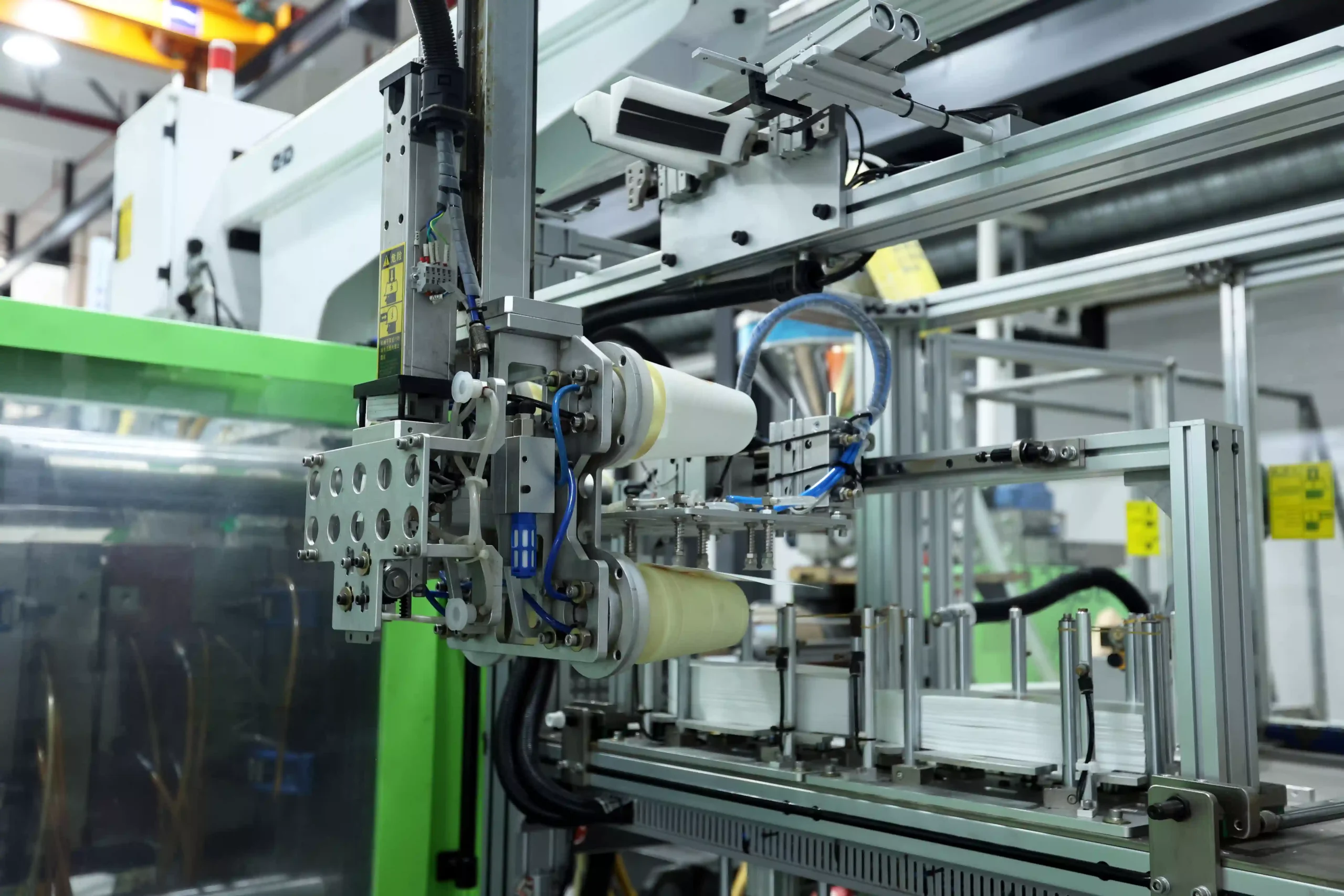
Watch robotic arms accurately place electrostatic micro-labels into high-cavitation tooling.
More factory videos02 / Engineering Comparison
IML vs. Conventional Decoration Methods
A practical comparison of IML, screen printing, heat transfer, and water transfer across design flexibility, surface durability, production workflow, and cost.
| Performance Metric |
Molded-In Process
IML (In-Mold Labeling)
PP Film Integrated During Molding
|
Post-Mold Process
Conventional Decoration Methods
Screen Printing / Offset / Heat Transfer / Water Transfer
|
|---|---|---|
| Structure How the design is applied |
Film Integrated During Molding
Pre-printed PP film is placed inside the mold and integrated with the cup during injection molding. |
Applied After Cup Forming
Designs are applied to the finished cup through printing, transfer, or decal processes. |
| Design Print area and design flexibility |
Large-Area Full-Wrap Graphics
Supports large-area graphics and full-wrap designs, subject to cup geometry, mold design, and label positioning. |
Process-Dependent Coverage
Print coverage depends on the selected process, cup shape, and equipment. Curved surfaces and seams may require additional design adjustments. |
| Durability Protection of printed graphics |
Film-Protected Graphics
Printed graphics are protected by the PP film and integrated into the molded product. Actual durability should be verified through application-specific testing. |
Process-Dependent Durability
Durability varies with the printing process, ink, coating, curing, and surface treatment. Some applications may require additional protective finishing. |
| Workflow Manufacturing steps |
Combined Molding Cycle
Label preparation and placement take place before injection. Decoration and molding are combined in the same molding cycle. |
Post-Forming Decoration
Decoration is generally performed after the cup is formed, requiring additional printing or transfer operations. |
| Economics Setup investment and production economics |
Higher Tooling, Volume-Driven
Requires dedicated tooling and label preparation. It can become more cost-effective for repeat orders and larger production volumes. |
Lower Setup, Flexible Volumes
May offer greater flexibility and lower initial setup costs for certain small-batch projects. Unit costs depend on the process and order quantity. |
IML is worth considering for projects requiring large-area graphics, integrated decoration, and repeatable mass production. Conventional printing and transfer methods may be more suitable for smaller batches, different materials, or specific design requirements. The best choice depends on your product design, order quantity, and budget.
03 / Creative Horizons
Limitless Design Possibilities
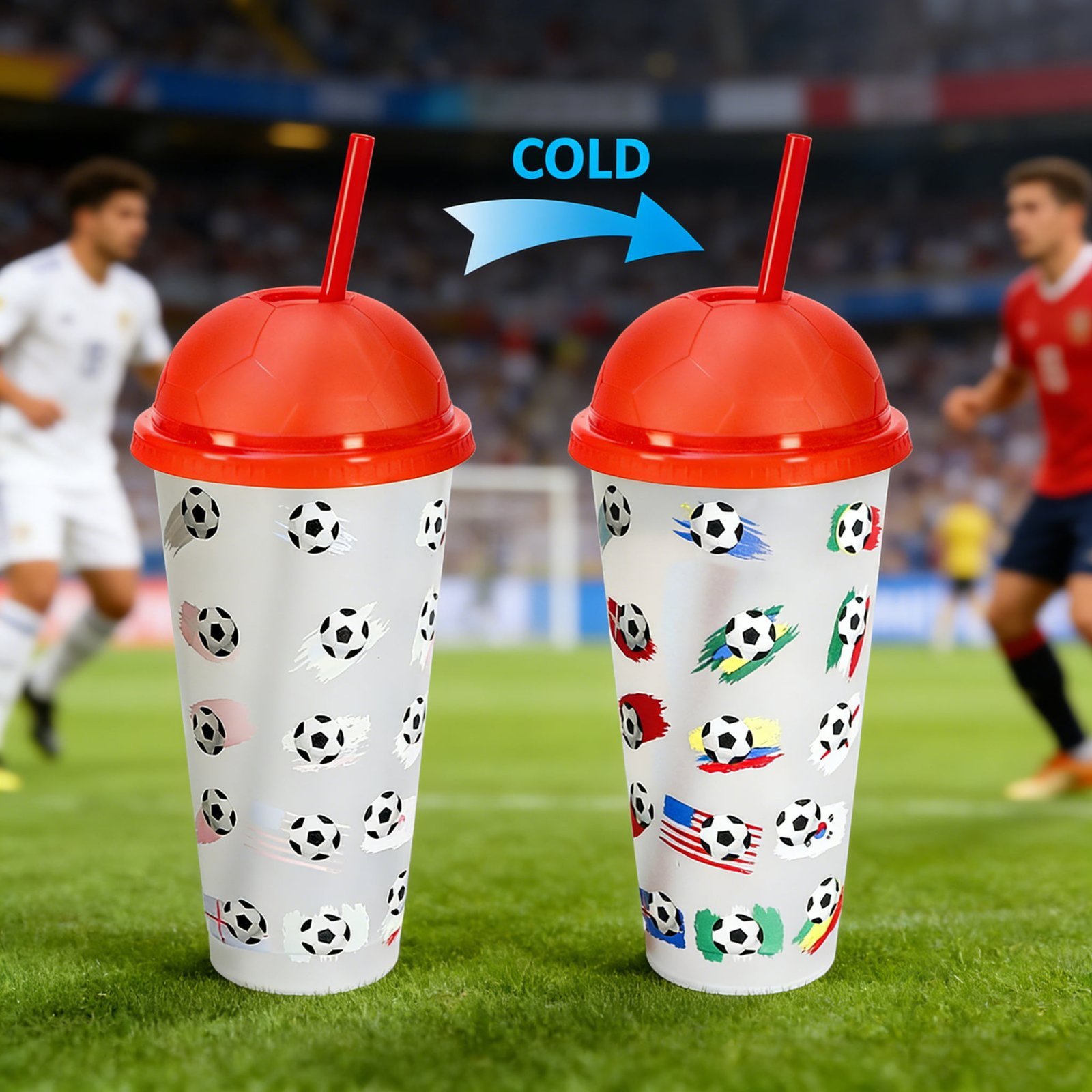 Sports & Event
Full-Wrap from bottom to top
360° edge-to-edge full-color stadium merchandise cup.

High-Fidelity Anime & Gaming IP
Zero pixel distortion on nuanced facial tones, line-art shading, and licensing logos.

Matte Luxury Texture
Anti-slip velvety matte film finish that repels fingerprint smudges in premium hospitality.

Metallic & Reflective Highlights
Mirror-foil underlay layers integrated directly into the in-mold label structure.
04 / In-Mold Labeling Process
6 Steps from Artwork to Finished Product
From artwork preparation and film printing to injection molding and final inspection, each stage is carefully managed to ensure consistent product quality.
Design & Feasibility Review
We review the cup structure, artwork, print area, and label requirements before production begins.
Artwork Preparation
Our team prepares print-ready artwork, checking colors, dimensions, and label positioning.
PP Film Printing
Approved designs are printed onto polypropylene (PP) film according to the project requirements.
Label Cutting & Preparation
Printed films are cut into the required shapes and prepared for placement inside the injection mold.
In-Mold Injection
The prepared label is positioned inside the mold. Molten plastic is injected, forming the cup and bonding the label with its surface.
Finished Product Inspection
Finished cups are checked for print positioning, appearance, molding quality, and label consistency.
05 / IML Production Equipment
The Equipment Behind Our IML Production
Our IML production setup combines injection molding machines, robotic handling systems, and cup-specific tooling. These equipment work together to position printed labels accurately and produce consistent molded drinkware.

IML Production Area
A designated production area for IML operations, with organized equipment layouts and material handling to support daily production.
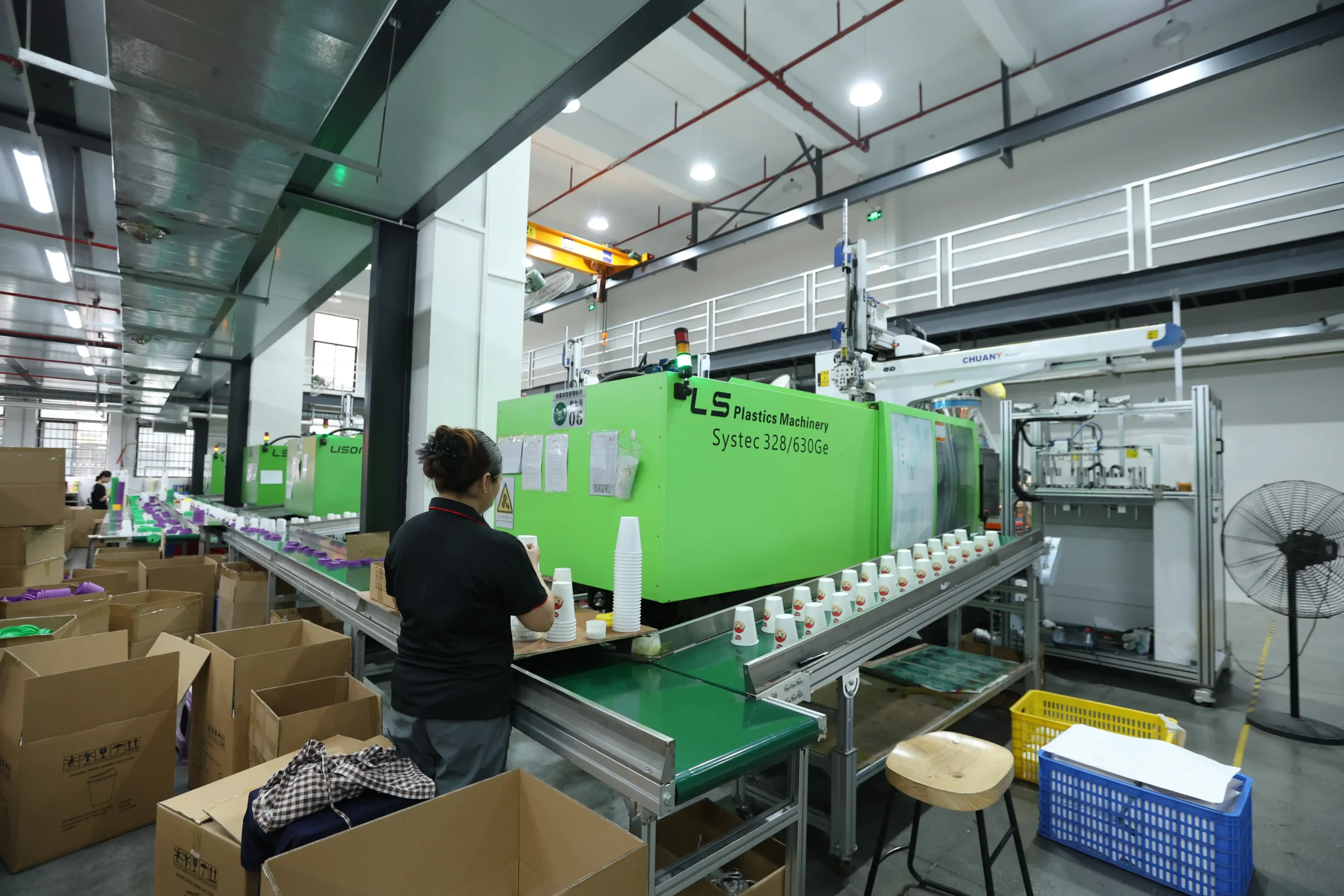
High-Speed Injection Molding Machines
Five injection molding machines configured for IML production, supporting efficient molding and consistent product output.
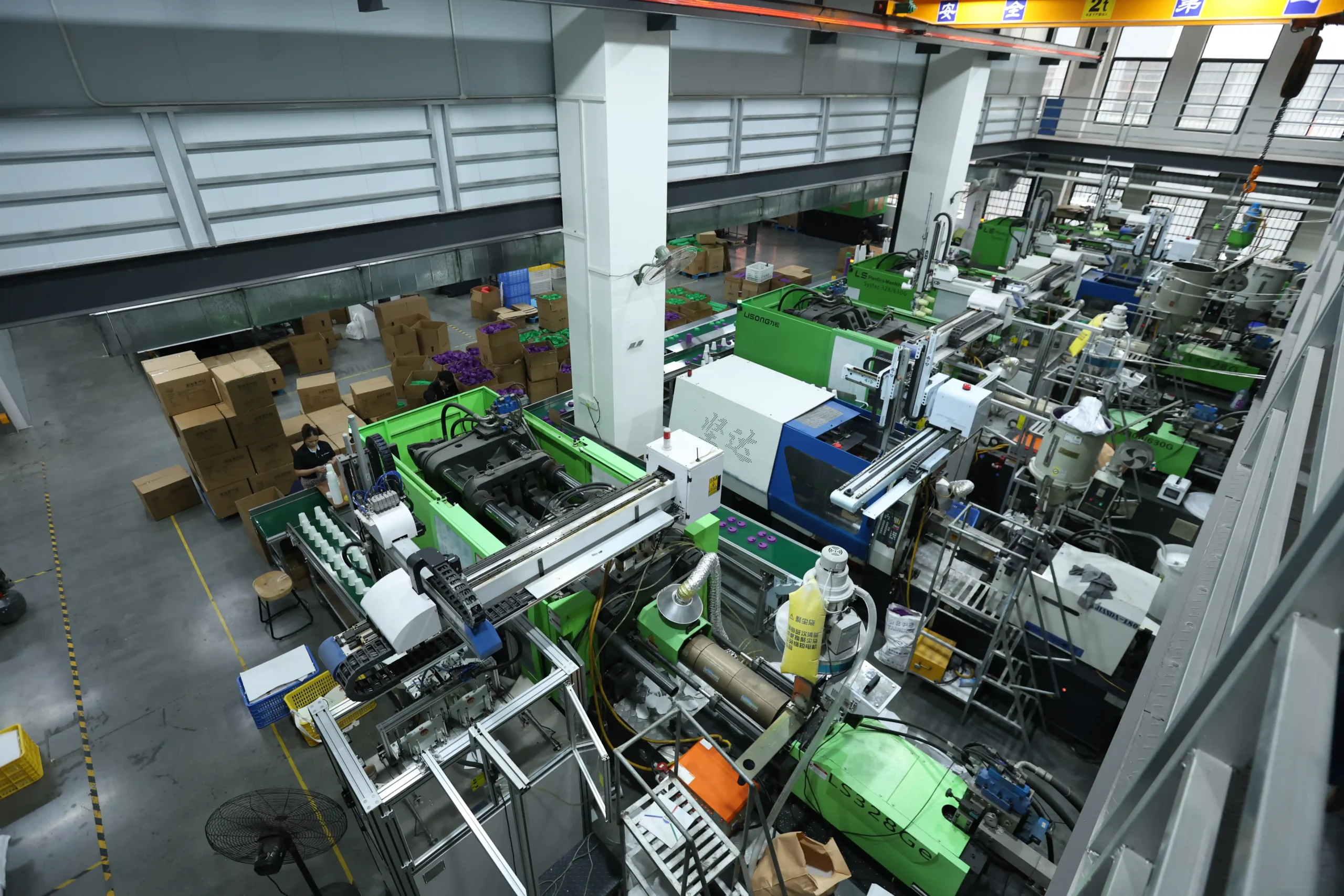
Additional Injection Molding Machines
Ten additional injection molding machines provide production flexibility and support different cup designs and order requirements.
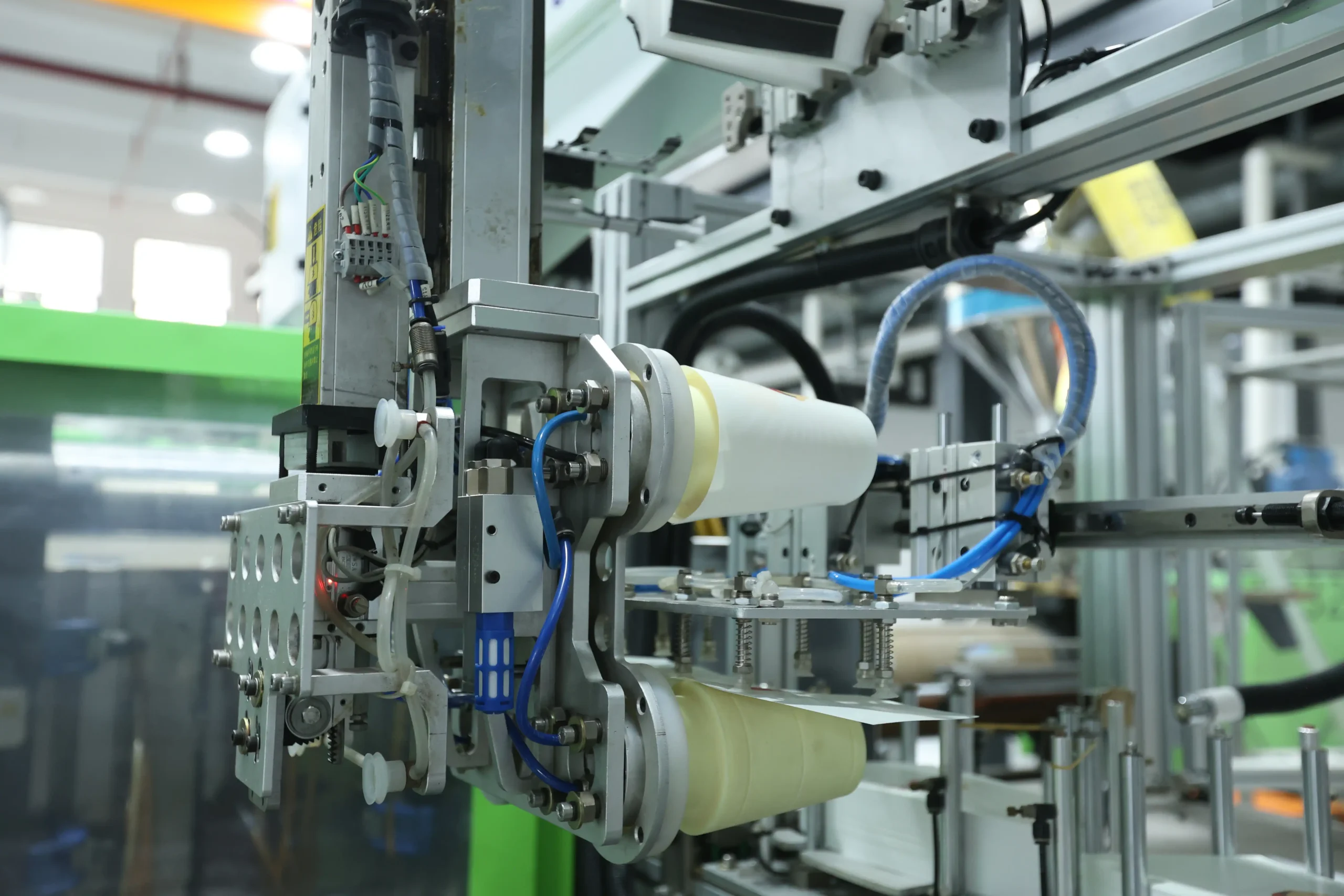
Robotic Handling Systems
Robotic arms assist with product handling during molding, reducing manual handling and helping maintain a consistent production cycle.
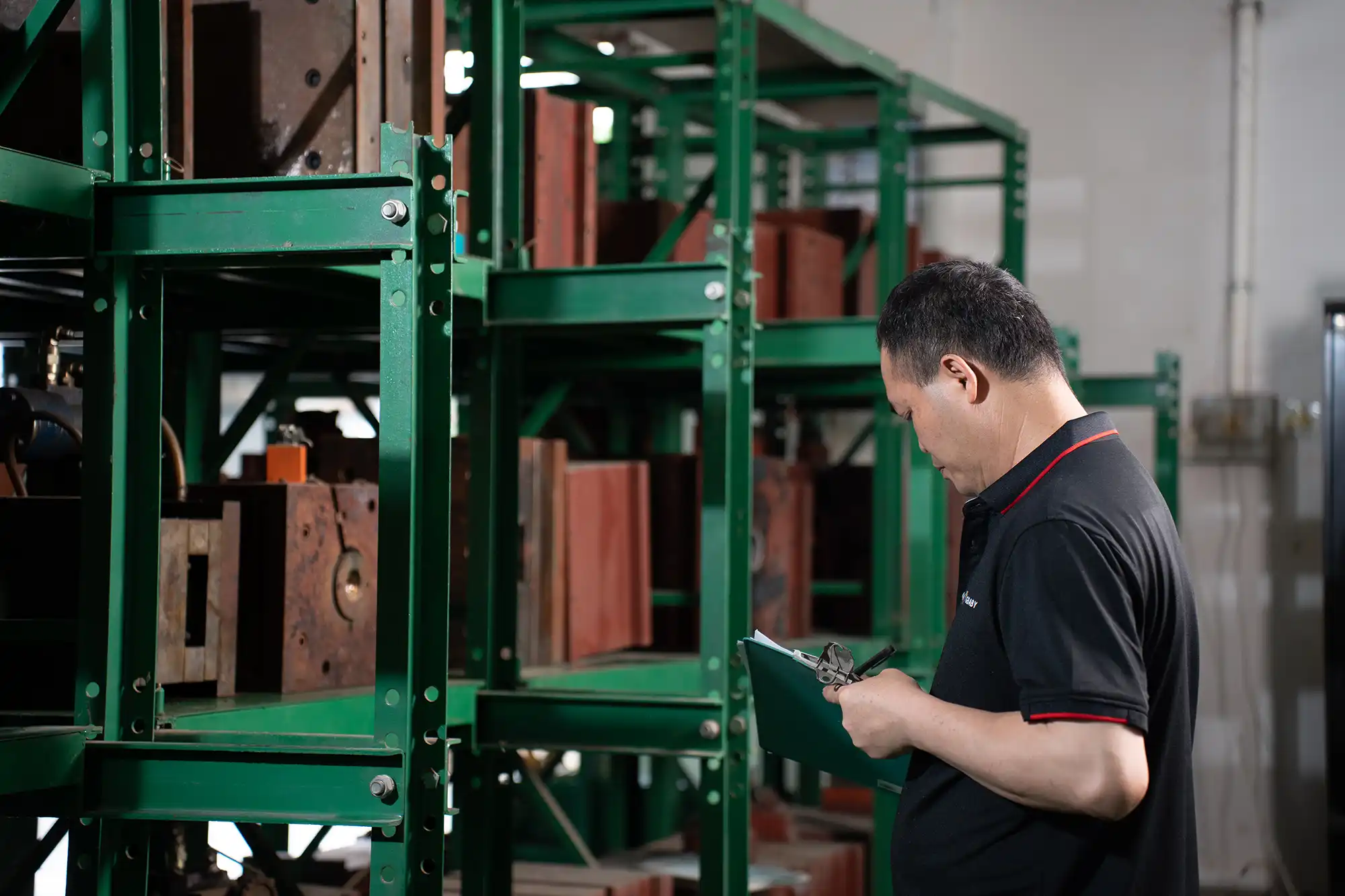
Custom Label Feeding & Positioning
Cup-specific label magazines and positioning fixtures help place printed films correctly inside the mold before injection.
See Our Equipment in Action
Want to see how our equipment operates? Watch our factory videos or browse our factory gallery to get a closer look at our production facilities.
06 / Questions & Answers
Frequently Asked Questions
We interviewed Mugbaby's most experienced engineers and sales managers to compile the five questions customers ask most often about in-mold labeling (IML), helping answer your initial questions and clarify the basics.
1. Why choose in-mold labeling instead of heat transfer for plastic cups? +
2. Why are IML plate fees lower? +
3. How do you calculate daily production capacity for IML cups? +
4. Can the seam on an IML cup be eliminated? +
5. Why does IML make color-changing cups easier to produce? +
05 / THE MUGBABY ADVANTAGE
One Team. From Printed Film to Finished Cup.
We bring IML film printing, label preparation, tooling, and injection molding together in one production workflow. This means fewer handovers, closer process coordination, and better control over your product from the first sample to mass production.
01 -- Color Matching & Control
We work with your approved artwork and color references to maintain consistent colors and print quality throughout production.
02 -- IML & Special Effect Expertise
Our experience with IML and color-changing materials allows us to develop customized designs combining printed graphics with thermochromic and photochromic effects.
03 -- Material & Safety Requirements
We select suitable materials and arrange relevant food-contact testing and documentation according to your product specifications and target market.
Let's Talk About Your IML Project
Tell us what you have in mind. Our team will help you evaluate the design, materials, and production options.