
Have you ever wondered why some cup designs are baked at just 180°C, while others require 500°C or even 800°C?
If you are sourcing custom drinkware, this is something worth understanding before choosing a decoration process.
The difference is not just about temperature. It also involves the color materials, decal composition and the performance you expect from your finished product.
At Mugbaby, we work with both low-temperature and high-temperature decoration. Based on our manufacturing experience, we would like to explain how they differ and help you decide which process is more suitable for your project.
Low-Temperature Decals: 180–200°C
Low-temperature decals use specially formulated organic color materials.1 After we transfer the printed decal onto the cup, it is baked at approximately 180–200°C to help the design adhere to the surface.
If your project requires rich colors, complex patterns or special visual effects, we recommend considering this process.
Why Choose Low-Temperature Decals?
- More Color Options: Organic inks offer greater flexibility when developing different colors and combinations.
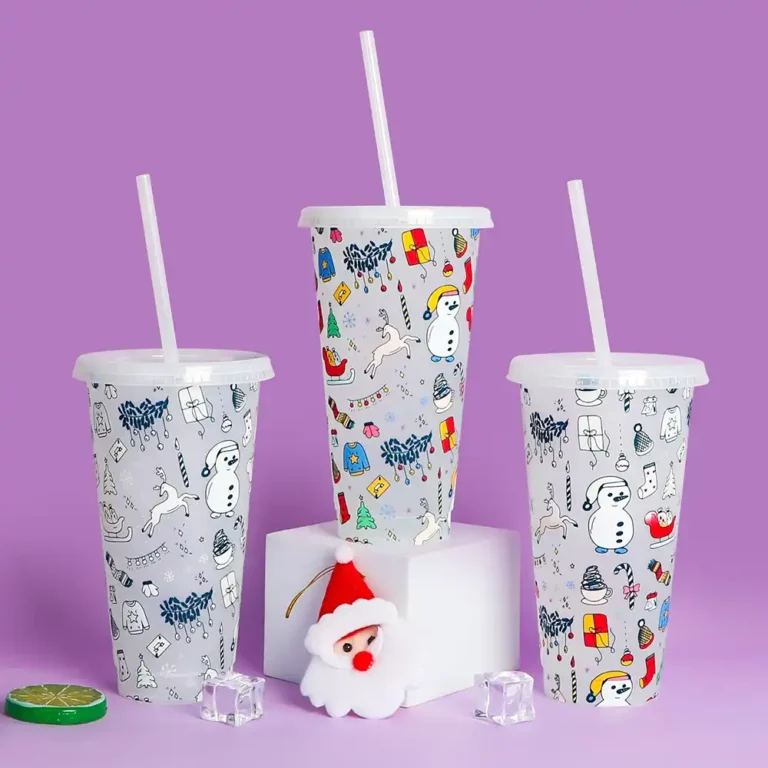
- Special Effects: We can work with thermochromic color-changing inks2, foil stamping, metallic effects and raised textures.
- Greater Design Flexibility: This process is suitable for creative artwork and more complex decorative requirements.
- Lower Firing Temperature: It is suitable for materials that cannot withstand traditional high-temperature firing.
What Should You Consider?
The main trade-off is durability.
Compared with properly fired high-temperature decals, low-temperature decoration generally has lower adhesion and abrasion resistance3, resulting in a shorter service life.
We generally do not recommend this process if your product needs to withstand microwave heating or dishwasher cleaning.
Our recommendation: If you are developing promotional cups, color-changing drinkware or products where appearance and special effects matter most, low-temperature decals may be the better choice.
High-Temperature Decals: 580–850°C
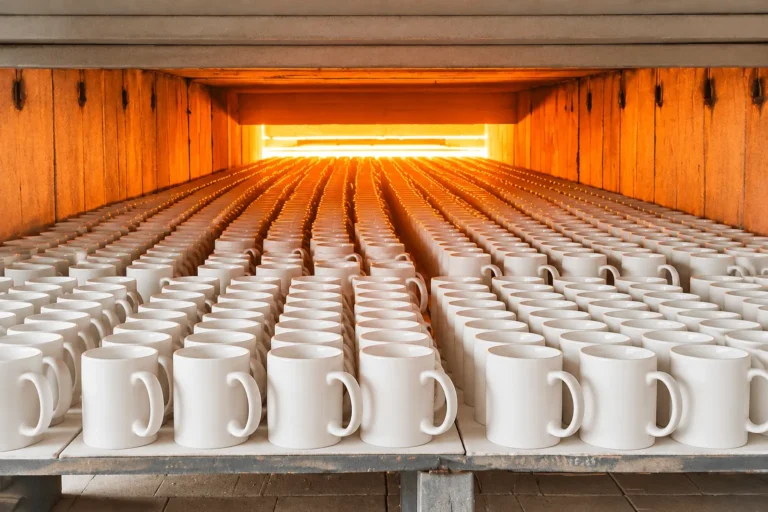
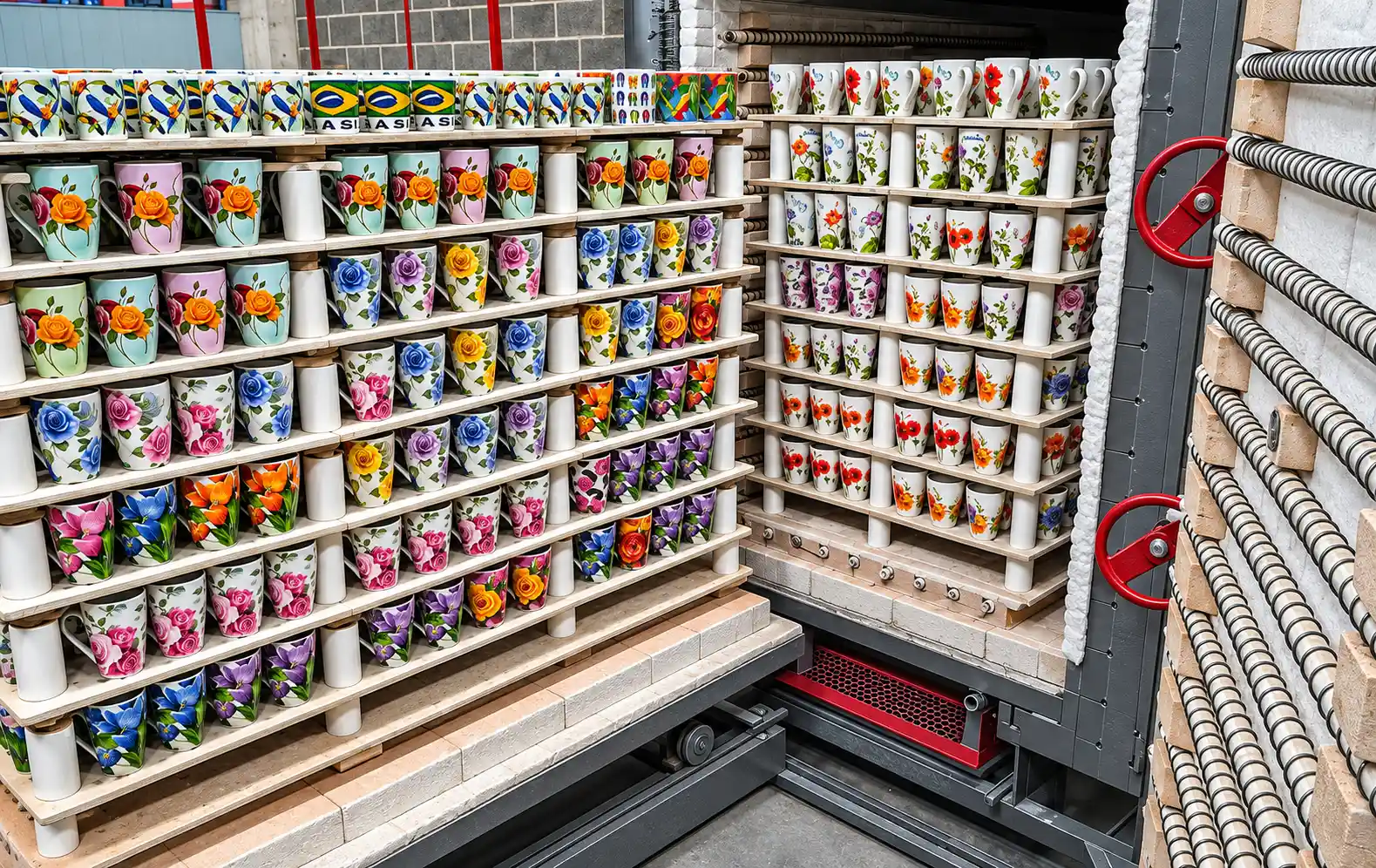
High-temperature decals use specially formulated inorganic color materials.4 After applying the decal, we fire the cup at approximately 580–850°C, depending on the material, glaze and decal formulation.
If durability and everyday usability are your priorities, you may want to consider this process.
Why Choose High-Temperature Decals?
- Stronger Adhesion: Properly fired decoration offers better bonding with the compatible surface.
- Better Abrasion Resistance: It is generally more resistant to everyday wear.
- Longer Product Life: It is suitable for products expected to undergo frequent use.
- Dishwasher Compatibility: Suitable high-temperature decoration systems can be developed and tested for dishwasher use.
What Should You Consider?
High-temperature firing limits the choice of color materials and decorative effects.
Some inorganic pigments cannot maintain their original appearance under high temperatures.5 This means certain colors, combinations and special effects may be difficult to achieve.
Our recommendation: If you are developing ceramic mugs or glass drinkware for everyday use, and durability is more important than complex decorative effects, high-temperature decals may be more suitable.
Low-Temperature vs. High-Temperature Decals: Which Should You Choose?
We often find that customers focus on the baking temperature when comparing these two processes. However, we recommend looking at the complete product requirements instead.
| Comparison | Low-Temperature Decals | High-Temperature Decals |
|---|---|---|
| Baking Temperature | 180–200°C | 580–850°C |
| Color Materials | Organic inks | Inorganic color materials |
| Color Options | More flexible | More restricted |
| Special Effects | More options | More limited |
| Adhesion | Relatively lower | Generally stronger |
| Abrasion Resistance | Relatively lower | Generally higher |
| Dishwasher Use | Generally unsuitable | Possible with tested systems |
| Product Life | Relatively shorter | Generally longer |
Here is how we would approach the decision:
- If you want more colors and creative artwork, we recommend low-temperature decoration.
- If you want thermochromic or other special effects, low-temperature decoration is worth considering.
- If you prioritize abrasion resistance and longer product life, we recommend evaluating high-temperature decoration.
- If your customers expect dishwasher-safe products, make sure the complete product and decoration system have been tested for that requirement.
Neither process is automatically better. We recommend choosing according to how your customers will actually use the cups.
One important reminder: Stainless steel and other metal cups must never be placed in a microwave, regardless of the decoration process.
What About Heavy Metals in Decoration Materials?
This is another point we recommend discussing with your supplier, especially if your products are intended for food and beverage contact.
Some traditional high-temperature inorganic pigments may contain compounds of heavy metals such as cadmium or lead to achieve particular colors.
Under certain conditions, these metals may migrate from the decoration into food or beverages.6 The actual risk depends on the pigment formulation, firing conditions and finished-product test results.
At Mugbaby, our low-temperature decoration process uses organic inks rather than relying on cadmium- or lead-based pigments to achieve colors.
This gives us more flexibility when developing colorful and special-effect drinkware.
However, you should not judge a product's safety by its firing temperature or ink category alone. We recommend checking the material documentation and applicable heavy metal migration test reports before approving a food-contact product.

Our advice: When evaluating suppliers, ask not only what type of ink they use, but also whether they can provide relevant test reports for the finished product.
How Should You Choose the Right Decoration Process?
Before making a decision, we suggest considering these five factors.
| What You Should Consider | Our Recommendation |
|---|---|
| Product Material | Check whether your cup material can withstand the required baking temperature.7 |
| Intended Use | Consider whether the product is for promotions, retail or everyday drinking.8 |
| Artwork | Decide whether you need standard printing, complex colors or special effects. |
| Durability | Confirm whether abrasion resistance and dishwasher use are important.9 |
| Target Market | Understand your customers' expectations and applicable food-contact requirements.10 |
For example, if you are developing a promotional color-changing cup, we would generally recommend low-temperature decoration. It gives us more flexibility when working with thermochromic inks and other special effects.
However, if you are developing a ceramic mug for everyday household use and your customers expect dishwasher resistance, we would suggest evaluating high-temperature decoration instead.
The best process is not necessarily the one with the highest temperature. It is the one that meets your product requirements.
How Mugbaby Can Help with Both Processes
At Mugbaby, low-temperature decoration is at the core of our manufacturing expertise.
We have extensive experience working with organic inks and special-effect printing, particularly thermochromic color-changing drinkware. This is where we have developed much of our manufacturing experience.
However, we understand that not every project needs color-changing effects or complex artwork.
For customers who prioritize stronger adhesion, longer product life and dishwasher-resistant decoration, we also provide high-temperature decal solutions.
We offer both processes because different products have different requirements.
When you discuss a project with us, we look at more than just the cup design. We consider:
- Your Product Material: Plastic, glass, ceramic, stainless steel or aluminum.
- Your Intended Use: Promotional giveaways, retail products, everyday drinkware or corporate gifts.
- Your Design: Standard printing, complex artwork, color-changing effects or metallic finishes.
- Your Performance Requirements: Abrasion resistance, dishwasher compatibility and expected product life.
- Your Target Market: Customer preferences and applicable food-contact requirements.
Based on these details, we will recommend a suitable decoration process for your project.
Not Sure Which Decoration Process to Choose?
You don't need to decide everything before contacting us.
Tell us what kind of cup you want to develop, how it will be used and what kind of design you have in mind.
Whether you need low-temperature special-effect printing or traditional high-temperature decoration, we are ready to help you evaluate the options.
At Mugbaby, we don't offer just one decoration method. We help you find the right one for your product.
"Low-Temperature Sintering Inks for Printed Bioelectronics - PMC", https://pmc.ncbi.nlm.nih.gov/articles/PMC13114235/. Studies on organic inks for low-temperature applications confirm their suitability for decorative purposes due to their chemical composition and thermal properties. Evidence role: general_support; source type: research. Supports: Organic color materials are formulated for use in low-temperature decals.. Scope note: Specific formulations may vary by manufacturer and application. ↩
"Thermochromic ink", https://en.wikipedia.org/wiki/Thermochromic_ink. Research on thermochromic inks indicates their ability to change color at specific temperatures, making them suitable for low-temperature applications. Evidence role: mechanism; source type: research. Supports: Thermochromic inks are compatible with low-temperature decoration processes.. Scope note: Performance may depend on the specific ink formulation and substrate. ↩
"High Temperature Decals and Stickers", https://fastdecals.com/shop/custom-decals-and-custom-stickers/high-temperature-decals.html?srsltid=AYCX9vLhJ_flb85mgs43gtsEgY1sIYFixvDnrPce79wIln22QU1cS20s. Comparative studies on drinkware decoration processes show that high-temperature decals exhibit stronger adhesion and greater abrasion resistance. Evidence role: statistic; source type: research. Supports: Low-temperature decoration has lower adhesion and abrasion resistance compared to high-temperature decoration.. Scope note: Durability may vary depending on the specific materials and firing conditions. ↩
"High Temperature Decals and Stickers", https://fastdecals.com/shop/custom-decals-and-custom-stickers/high-temperature-decals.html?srsltid=AYCX9vL1MpF2NNVXD9x9MNBm5PQMmxMDjAmmhYZTotU4gz6lCdooZhn-. Research on inorganic pigments for high-temperature applications confirms their stability and suitability for decorative purposes. Evidence role: general_support; source type: research. Supports: Inorganic color materials are formulated for use in high-temperature decals.. Scope note: Specific formulations may vary by manufacturer and application. ↩
"Comparative Study on the Influence of Inorganic Pigments on ...", https://pmc.ncbi.nlm.nih.gov/articles/PMC13515802/. Studies on pigment stability during high-temperature firing show that certain inorganic pigments may degrade or change color. Evidence role: mechanism; source type: research. Supports: Some inorganic pigments lose their original appearance under high temperatures.. Scope note: Effects depend on the specific pigment and firing conditions. ↩
"High levels of migratable lead and cadmium on decorated drinking ...", https://pubmed.ncbi.nlm.nih.gov/29070454/. Studies on heavy metal migration from ceramic decorations show that firing conditions and pigment composition influence migration risks. Evidence role: mechanism; source type: research. Supports: Heavy metals in pigments can migrate into food or beverages under certain conditions.. Scope note: Migration depends on specific use cases and testing conditions. ↩
"Firing Temperatures", https://www2.bellevuecollege.edu/artshum/materials/art/husby/firingtemperatures.pdf. Educational resources on material science explain the thermal resistance of common drinkware materials like ceramic, glass, and plastic. Evidence role: mechanism; source type: education. Supports: Cup materials must be compatible with the required baking temperature.. Scope note: Specific material properties may vary by manufacturer. ↩
"Make the Move to Drinkware: 5 Ways to Decorate", https://www.education.sanmar.com/decorator-relations/5-ways-to-decorate-drinkware/. Guidelines on drinkware manufacturing suggest aligning decoration methods with product use cases, such as promotional or everyday use. Evidence role: general_support; source type: education. Supports: The intended use of drinkware influences the choice of decoration process.. Scope note: Recommendations may vary by industry and market. ↩
"Glassware design and drinking behaviours: a review of impact and ...", https://pmc.ncbi.nlm.nih.gov/articles/PMC8884253/. Educational resources on drinkware design emphasize durability and dishwasher compatibility as critical factors for consumer satisfaction. Evidence role: general_support; source type: education. Supports: Abrasion resistance and dishwasher compatibility are key factors in drinkware decoration.. Scope note: Specific requirements may vary by target market. ↩
"Food Packaging & Other Substances that Come in Contact ...", https://www.fda.gov/food/food-ingredients-packaging/food-packaging-other-substances-come-contact-food-information-consumers. Government guidelines on food-contact materials highlight the importance of compliance with safety standards and consumer preferences. Evidence role: expert_consensus; source type: government. Supports: Customer expectations and food-contact requirements are critical in choosing a decoration process.. Scope note: Regulations may differ by region and product category. ↩