
Color changing effects can fade over time when the drinkware surface, ink, coating, or active layer is exposed to conditions beyond its intended use. Buyers often feel frustrated when a cup looks less responsive after repeated washing or outdoor display. The better solution is to evaluate use conditions, product structure, and supplier process together.
Color changing effects may fade because of cleaning habits, detergent strength, abrasive brushing, UV or strong light exposure, substrate material, coating adhesion, and the specific color-change technology used. Fading is not always a simple supplier quality failure. Buyers should check whether the product was designed, tested, and cared for under the same conditions as real use.
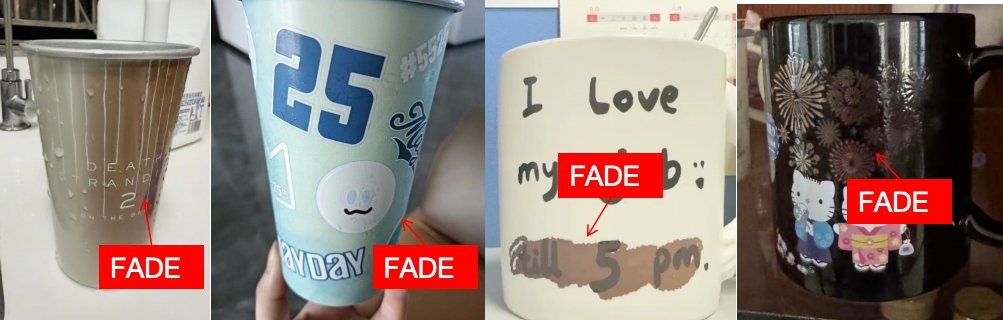
In my work with OEM and ODM drinkware buyers, I often see one key misunderstanding. The better question is not only, “How long will it last?” The better question is, “Under what conditions may it fade faster?” That small change leads to a much more useful evaluation.
Why do color changing effects fade faster under some use conditions?
Buyers often ask whether fading means a product is defective. That question is understandable, especially when the item is part of a retail launch or promotional campaign. However, color changing effects depend on materials, surface treatment, and real-use conditions. A simple yes-or-no answer can mislead procurement teams.
Color changing effects fade faster when the active layer is stressed by heat, washing, abrasion, chemicals, light, or poor adhesion to the base material.1 The risk depends on the color-change mechanism, the drinkware substrate, the coating system, and how the product is used after delivery.
The key issue is use-condition matching
In after-sales discussions, I usually start by asking a few practical questions before making any judgment:
- Was the product washed by hand or in a dishwasher?
- Was strong detergent or alcohol-based cleaner used?
- Was the cup scrubbed with a rough sponge or metal brush?
- Was it stored near a window or used outdoors often?
- Was the effect thermochromic, cold-change, photochromic, or another system?
- Was the effect printed, sprayed, coated, wrapped, or embedded?
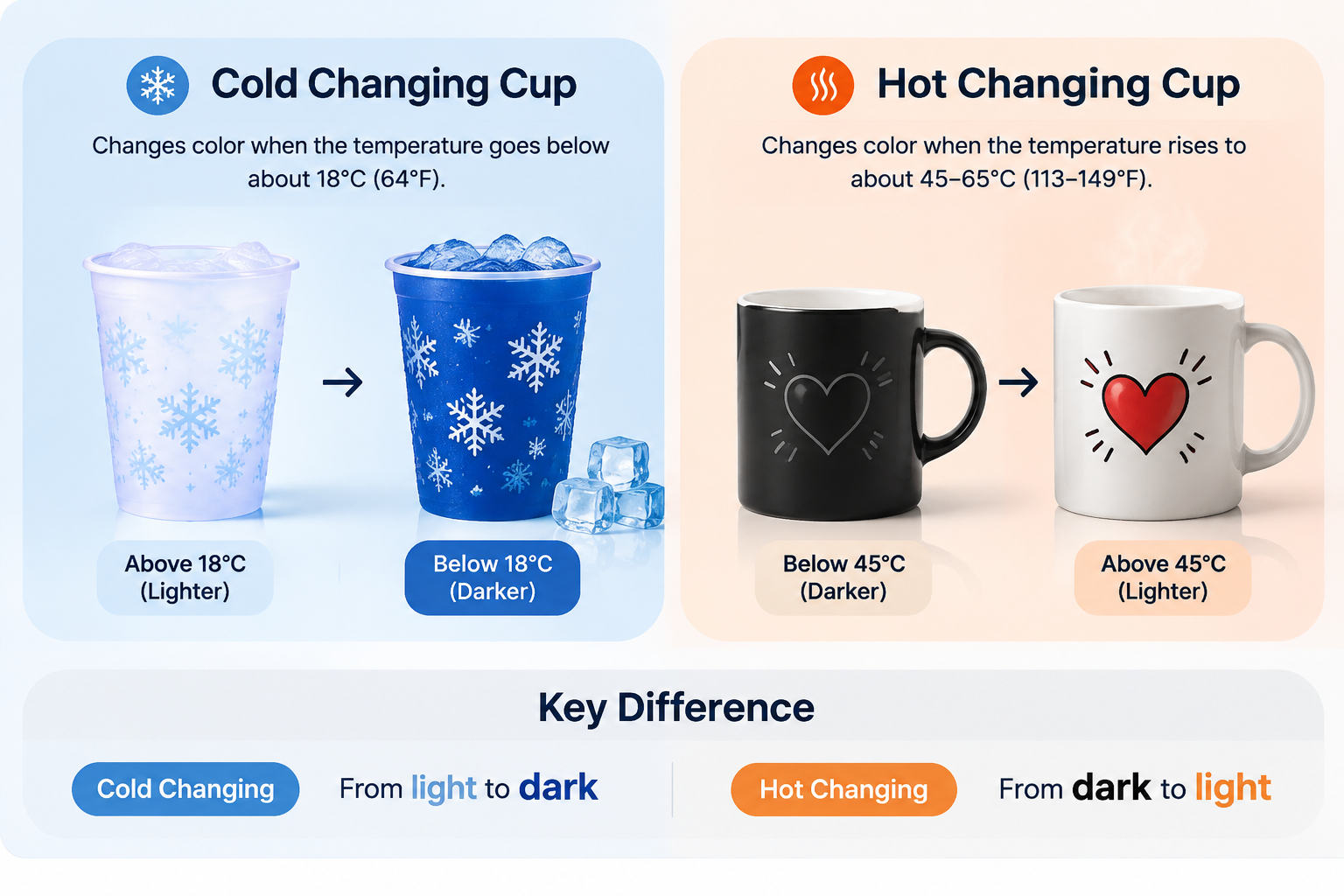
These questions matter because color changing effects are not all built the same way2. A cold-change plastic cup, a photochromic glass tumbler, and a thermochromic ceramic mug may look similar to consumers, but the performance risks are not identical.
Fading is usually a system issue, not one single cause
A drinkware item is a system. It has a base material, surface preparation, ink or coating, curing conditions, decoration method, packaging, storage, and final use environment. If one link is weak, the color response may become less obvious.
Here is a simplified way buyers can think about the risk:
| Factor | Why it matters | Common buyer check |
|---|---|---|
| Color-change mechanism | Different technologies react to heat, cold, or light in different ways | Ask the supplier to identify the mechanism clearly |
| Substrate material | Plastic, glass, ceramic, aluminum, and stainless steel have different adhesion behavior | Request material and surface-treatment details |
| Cleaning method | Dishwashers, strong detergents, and abrasion can stress surface layers | Confirm care instructions before production |
| Light exposure | UV and strong light may affect some photochromic systems | Match testing to actual display and use |
| Surface treatment | Primer, coating, curing, and ink selection influence durability | Review samples and process capability |
| End-user habits | Real use may be harsher than standard sampling conditions | Include warnings or care cards when needed |
A typical buyer scenario
A typical scenario is a promotional gift buyer who approves a sample after a simple visual check. The sample changes color beautifully. Later, the final users put the cups in dishwashers every day. After several cycles, the effect becomes weaker. In that case, the procurement team may first suspect batch quality. That is possible, and it should be checked. But the team should also check whether the approved product was designed for dishwasher exposure.
I have learned that the most productive conversations happen when buyers compare expected use with qualified use. If a product is intended for hand wash only, the label, packaging, sales page, and customer instructions should say so clearly. If a brand wants dishwasher resistance, the supplier should know that requirement before sampling, because the material system may need to change.
The practical question is not “Will it ever fade?” The practical question is “What conditions should we design and verify for?”
For procurement teams, this approach reduces disputes. It also helps suppliers propose a more suitable process at the beginning, instead of solving complaints after shipment.
How do cleaning methods affect color changing effects?
Cleaning is one of the most common reasons buyers contact us about fading. The problem becomes more serious when users treat color-change drinkware like ordinary plain cups. Strong detergents, high heat, and rough brushing can slowly damage surface layers involved in color changing effects.
Cleaning methods affect color changing effects by stressing the coating, ink, or active surface layer. Dishwashers may add heat, water pressure, alkaline detergent, and repeated cycles.3 Abrasive pads can physically wear the surface. Hand washing with mild detergent is often safer, but care instructions should match the actual product design.
Dishwashers combine several stresses
When buyers ask about dishwasher safety, I try to avoid giving a casual answer. A dishwasher is not just “water.” It can include:
- High water temperature
- Strong alkaline detergent
- Long soaking time
- Water jet pressure
- Repeated thermal cycling
- Contact with other hard objects
Each factor may weaken a decorative surface in a different way. If the color-changing function depends on a coating or ink layer, repeated dishwashing may reduce the clarity of the effect4. If the effect is protected by a topcoat, the topcoat quality and curing process become important.
This does not mean every color-change product fails in a dishwasher. It means buyers should not assume dishwasher compatibility unless the supplier has designed and evaluated the item for that use.
Strong detergents and solvents can change the risk profile
Many end users use cleaning products that are stronger than expected. Some use alcohol wipes. Some use bleach-based products. Some use heavy-duty kitchen cleaners. These chemicals may not be suitable for decorated drinkware.5
For procurement teams, I recommend asking suppliers to define the cleaning boundary in plain language:
- Hand wash only?
- Mild detergent only?
- No soaking?
- No bleach?
- No alcohol wiping?
- No abrasive sponge?
- No dishwasher?
- No microwave, if relevant to the base material and decoration?
These are not small details. They directly affect consumer expectations and after-sales risk.
Abrasion is often underestimated
Abrasive wear is easy to miss because it happens gradually. A rough sponge may not remove a coating in one wash. However, repeated brushing can reduce gloss, thin a printed layer, or damage a responsive surface6.
Here is a useful comparison for buyers:
| Cleaning method | Relative risk for decorated surfaces | Procurement note |
|---|---|---|
| Soft sponge + mild detergent | Lower | Often preferred for delicate effects |
| Dishwasher cycles | Medium to high | Must be verified for the specific item |
| Rough scouring pad | High | Usually risky for coatings and printed designs |
| Metal brush | Very high | Not recommended for decorative drinkware |
| Strong alkaline cleaner | Medium to high | Compatibility should be checked |
| Alcohol or solvent wipe | Variable | Depends on coating and ink chemistry |
What I check in after-sales discussions
When a buyer reports fading, I usually ask for photos and use details. I may ask whether the fading appears evenly or only on raised edges. Edge fading may suggest abrasion. Patchy dullness may suggest chemical attack or poor cleaning compatibility. Peeling may point to adhesion, curing, or surface preparation issues.
This is not a laboratory conclusion. It is a practical first step. If the order is important, the buyer should consider third-party testing or professional evaluation. For B2B procurement, it is also useful to keep retained samples from production. These samples help compare unused stock, used products, and approved pre-production samples.
The goal is not to blame the user. The goal is to understand whether the cleaning condition matched the product design. If it did not, future orders need better care instructions or a different technical solution.
When does light exposure make color changing effects fade?
Light exposure can be confusing because buyers sometimes generalize one problem across all products. Photochromic drinkware, outdoor displays, and window storage raise different concerns from heat-reactive or cold-reactive items. Color changing effects may fade under strong light, but the mechanism must be identified first.
Light exposure is most relevant when the color-change system is photochromic or when pigments, coatings, or printed designs are sensitive to UV and strong sunlight. Long-term UV exposure may reduce responsiveness or alter appearance.7 However, not every thermochromic or cold-change product fades for the same light-related reason.
Do not mix different color-change mechanisms
One mistake I see in buyer discussions is treating all color-change products as the same. They are not. The trigger matters.
| Mechanism type | Common trigger | Light-related concern |
|---|---|---|
| Thermochromic | Heat | Light may affect appearance indirectly, but heat response is the main function |
| Cold-change | Cold liquid or low temperature | Cleaning and surface wear are often major concerns |
| Photochromic | Sunlight or UV | UV exposure and light fatigue may be more relevant |
| Decorative color-shift finish | Viewing angle or surface effect | Abrasion and coating damage may dominate |
This table is simplified, but it helps buyers ask better questions. If a supplier says a product changes color in sunlight, the buyer should ask whether it is photochromic and whether long-term light exposure has been considered. If a cup changes with cold water, the buyer should not automatically apply the same UV assumptions without more information.
Store display conditions can be harsher than expected
A typical scenario is a retail brand that displays colorful drinkware near a large window. The product looks attractive in the store, but it may receive strong light for weeks. If the surface or active pigment is light-sensitive, this display condition may contribute to fading or reduced response.
For procurement planning, buyers should consider the full product journey:
- Factory storage
- Sea or air shipment
- Warehouse storage
- Retail display
- Consumer use
- Home storage near windows or outdoors
A product may pass a short sample review but still face more severe conditions in retail or consumer environments.
Packaging and instructions help manage risk
Packaging cannot solve all technical limitations, but it can reduce unnecessary exposure. For light-sensitive products, a buyer may consider:
- Opaque or UV-reducing packaging
- Avoiding long-term window display
- Clear shelf-life and storage guidance where appropriate
- Care cards for end users
- Sample testing that simulates expected display conditions
I do not recommend making broad promises such as “will not fade in sunlight.” That wording is risky unless it is supported by verified testing for the exact product, color system, and exposure condition.
What buyers should ask suppliers
When light exposure matters, procurement teams should ask focused questions:
- What type of color-change technology is used?
- Is the effect triggered by UV, heat, cold, or another condition?
- Is the decorative layer protected by a coating?
- Are there storage conditions to avoid?
- Can the supplier provide samples for exposure checks?
- Are any test reports available, and do they match the exact item?
If a supplier provides certifications or test documents, buyers should verify that they apply to the same material, finish, production process, and intended market. A document from a similar product may not fully represent the new order.
In my experience, buyers make better decisions when they separate light-triggered performance from general decoration durability. That distinction prevents overreaction and helps teams choose the right material solution.
How do material and surface treatment influence color changing effects?
Material choice is not only about appearance or price. It can influence adhesion, coating behavior, curing conditions, and long-term durability. Color changing effects may perform differently on plastic, glass, ceramic, aluminum, and stainless steel because each surface interacts with inks and coatings in its own way.
Material and surface treatment influence color changing effects by changing how well the active layer bonds to the drinkware surface. Surface energy, coating compatibility, primer use, curing temperature, and finishing method all matter.8 A strong design considers both the visual effect and the manufacturing process behind it.
Different drinkware bases create different challenges
As a drinkware manufacturer, I have seen buyers focus heavily on the visual sample and less on the base material. That is natural. The sample is what everyone can see. However, the hidden structure often decides how well the item performs in real use.
Here is a practical comparison:
| Base material | Common advantage | Durability concern to check |
|---|---|---|
| Plastic | Lightweight, flexible, cost-effective | Heat resistance, coating adhesion, dishwasher exposure |
| Glass | Premium look, smooth surface | Surface preparation, impact risk, coating compatibility |
| Ceramic | Good for mugs, stable feel | Glaze compatibility, firing or curing process |
| Aluminum | Lightweight, metallic appearance | Surface treatment, anodizing or coating adhesion |
| Stainless steel | Durable structure, premium category | Powder coating, printing adhesion, edge wear |
This does not mean one material is always better. It means each material needs a suitable process.
Surface preparation matters before decoration
Before applying a color-change ink or coating, the surface may need cleaning, priming, flame treatment, corona treatment9, spraying, glazing, or other preparation. The exact process depends on the material and production method.
If the surface is not prepared well, the active layer may look fine at first but become weak after washing or handling. In B2B projects, this is why sample approval should not focus only on the first-day appearance. Buyers should also check:
- Adhesion behavior
- Rub resistance
- Cleaning compatibility
- Color response after repeated use
- Edge and lip-area durability
- Odor and food-contact requirements where relevant
- Market-specific compliance documents
For any food-contact drinkware, buyers should also verify applicable safety documents for the target market.10 These documents should come from qualified testing parties and should match the exact product construction.
Product design can reduce fading risk
Good design choices can improve durability. For example, a brand may choose to place the color-change decoration away from high-rub areas. A supplier may recommend a protective topcoat. A product manager may decide that hand-wash-only positioning is acceptable for a promotional item but not for a premium retail mug.
Here are useful design questions:
-
Where is the effect located?
High-touch areas may wear faster. -
Is the effect exposed or protected?
Exposed layers may show stronger response but can be more vulnerable. -
Does the decoration cover edges or corners?
Edges often face more abrasion. -
Will the user drink directly from the decorated area?
Lip-contact areas may need extra care and compliance review. -
What price level does the product target?
Higher durability often requires more process control and cost.
Buyer evaluation should include real-use sampling
I encourage buyers to run small, realistic checks before mass production. These checks do not replace professional laboratory testing, but they reveal practical problems early.
A simple internal review may include:
- Washing samples by the intended method
- Testing with the intended drink temperature
- Checking color response after repeated cycles
- Observing surface scratches after normal handling
- Storing one sample near light and one away from light
- Comparing results with an untouched control sample
For larger retail programs, buyers should use qualified professional evaluation and third-party testing where needed. This is especially important when the item must meet specific safety, durability, or labeling expectations.
In my experience, suppliers and buyers work best when the design brief includes real use. “Color changing cup” is not enough. A better brief says, “Cold-change plastic tumbler for summer promotion, hand wash only, used mainly with iced drinks, no dishwasher claim, packed with care card.” That kind of detail helps the factory choose a more suitable process from the start.
How should buyers judge whether fading is a defect or expected wear?
The hardest after-sales question is not whether fading exists. The harder question is what caused it. Buyers need a fair method because fading can come from supplier process issues, unsuitable product design, harsh use conditions, or unclear care instructions. Color changing effects require a structured review.
Buyers should judge fading by comparing the approved sample, production sample, unused retained sample, care instructions, and real-use history. If fading appears before normal use, supplier quality should be checked. If it appears after harsh cleaning, sunlight, or abrasion, the issue may involve use conditions or product-positioning mismatch.
Start with evidence, not assumptions
In after-sales discussions, I find that photos alone are helpful but not always enough. A good review usually includes:
- Original approved sample
- Mass production retained sample
- Customer-used sample if available
- Photos under consistent lighting
- Cleaning and usage history
- Packaging and care instruction review
- Batch number or shipment record
- Any available test documents
This evidence helps everyone avoid jumping to conclusions.
Compare three conditions
A practical diagnosis often compares three product states:
| Product state | What it shows | Why it matters |
|---|---|---|
| Approved sample | Original buyer expectation | Confirms the target appearance |
| Unused production sample | Factory output condition | Helps identify batch or process variation |
| Used customer sample | Real-world performance | Shows wear, chemical exposure, or fading pattern |
If the unused production sample already has weak color response, the issue may point to production consistency, material storage, ink quality, curing, or process control. If the unused sample looks correct but the used sample shows edge wear or cleaning marks, use conditions become more relevant.
Look at the fading pattern
Different fading patterns may suggest different directions for investigation:
- Even fading over the whole surface may suggest light exposure, chemical exposure, or general material aging.
- Fading on raised areas or edges may suggest abrasion.
- Peeling or flaking may suggest adhesion or curing problems.
- Patchy fading may suggest uneven cleaning, chemical contact, or process inconsistency.
- Weak response from the beginning may suggest incorrect formulation, insufficient active material, or production variation.
These are practical clues, not final lab conclusions. For high-value claims, buyers should use qualified testing and technical evaluation.
Care instructions are part of the product
A product can be technically acceptable but commercially risky if the care instructions are unclear. For example, if a cup is hand-wash only but the packaging does not say so, consumers may use a dishwasher. That creates avoidable complaints.
Good B2B documentation may include:
- Care label artwork
- Product instruction card
- Online listing wording
- Dishwasher and microwave statements
- Storage recommendations
- Warning statements for abrasive cleaning
- Target market compliance documents
Buyers should approve these documents before mass production. They should also verify whether any performance claims are supported. A claim such as “dishwasher safe” should not be added casually to improve sales appeal.11
A balanced procurement view
I believe the fairest approach is balanced. Suppliers should control materials, process, and consistency. Buyers should provide realistic use requirements. Both sides should agree on care instructions and sample evaluation before production.
Fading should never be dismissed automatically as user misuse. At the same time, it should not always be labeled as supplier failure without checking how the product was used. The right answer depends on evidence, product design, and agreed specifications.
Frequently Asked Questions
Do all color changing effects fade eventually?
Most decorated or responsive surfaces can change over time depending on use, cleaning, storage, and exposure. However, the rate and reason vary by mechanism and material. Buyers should avoid fixed lifespan assumptions and instead evaluate the product under expected real-use conditions.
Is dishwasher use always bad for color-change drinkware?
Dishwasher use is not automatically impossible, but it is a higher-risk condition for many decorated drinkware items. Heat, detergent, water pressure, and repeated cycles can stress coatings or inks. Buyers should only make dishwasher-safe claims when the exact product has been designed and evaluated for that use.
Does sunlight affect every color-changing cup?
Sunlight does not affect every color-changing cup in the same way. Photochromic products are more directly linked to UV or light exposure.12 Thermochromic and cold-change products may have other main risks, such as heat, washing, abrasion, or coating durability.
Can fading be prevented completely?
No supplier should promise that fading can be prevented completely under all conditions. The better goal is to reduce risk through suitable material selection, surface treatment, protective coatings, clear care instructions, and realistic testing before mass production.
What should I ask a supplier before ordering color-change drinkware?
You should ask about the color-change mechanism, base material, surface treatment, cleaning limits, light exposure limits, care instructions, sample testing, and compliance documents for your target market. You should also share the real use scenario, not only the design artwork.
Conclusion
Color changing effects may fade over time for several reasons, including cleaning method, detergent strength, abrasion, light exposure, substrate material, and surface-treatment quality. Buyers should avoid judging every fading case as a simple quality failure or user mistake. A better approach is to match the product design with the expected use environment and verify key claims before production. If you are planning a custom drinkware project, share your material, market, and use requirements with us so we can help you evaluate the right OEM/ODM solution.
"Recent Advances in Reversible Thermochromic Materials for Smart ...", https://pmc.ncbi.nlm.nih.gov/articles/PMC12942208/. A materials-science study on responsive pigments or functional coatings supports that heat, light, chemical exposure, abrasion, and adhesion failure can reduce coating performance; the evidence is mechanistic and may not directly test the exact drinkware construction described here. Evidence role: mechanism; source type: paper. Supports: A materials-science source should explain that responsive pigments, inks, or coatings can degrade or lose function under thermal, chemical, photochemical, abrasive, or adhesion-related stress.. Scope note: The source may address comparable coatings or pigments generally rather than the specific cup, ink, or supplier process. ↩
"Thermochromism", https://en.wikipedia.org/wiki/Thermochromism. Reference definitions of thermochromism and photochromism support that color-changing effects can arise from different stimulus-response mechanisms, although such definitions do not by themselves establish durability for any particular drinkware product. Evidence role: definition; source type: encyclopedia. Supports: A neutral reference should define thermochromism and photochromism and show that color change can be triggered by different stimuli such as temperature or light.. Scope note: Definitions support the distinction between mechanisms, not the performance lifetime of a finished item. ↩
"Dishwasher detergent", https://en.wikipedia.org/wiki/Dishwasher_detergent. Technical descriptions of automatic dishwashing support that machine washing exposes articles to elevated temperature, detergent chemistry, spray action, and repeated cycles; exact exposure varies by appliance, detergent formulation, and program. Evidence role: general_support; source type: institution. Supports: An institutional source should document that automatic dishwashing involves elevated temperature, spray or mechanical action, detergent chemistry, and repeated wash cycles.. Scope note: The source supports the dishwasher environment generally, not the failure of a specific color-changing cup. ↩
"Surface chemistry of gravure printed décor paper and adhesion of ...", https://bioresources.cnr.ncsu.edu/resources/surface-chemistry-of-gravure-printed-decor-paper-and-adhesion-of-melamine-formaldehyde-resin-coatings/. Research on decorative or functional coating durability under repeated washing supports that dishwasher exposure can alter surface appearance or coating integrity; the evidence is contextual unless the study tests the same color-change chemistry and substrate. Evidence role: mechanism; source type: paper. Supports: A study should show that repeated washing or dishwasher testing can affect coating appearance, adhesion, gloss, or printed-layer integrity.. Scope note: Comparable coating data may not directly quantify fading of the exact thermochromic, cold-change, or photochromic drinkware product. ↩
"Chemical Disinfectants | Infection Control", https://www.cdc.gov/infection-control/hcp/disinfection-sterilization/chemical-disinfectants.html. Coatings literature supports that solvent, oxidizing, and alkaline cleaners can change or damage some polymeric coatings and inks; this provides contextual support because chemical resistance depends strongly on the specific formulation and curing conditions. Evidence role: mechanism; source type: paper. Supports: A coatings or ink-chemistry source should explain that solvents, oxidizing cleaners, and alkaline detergents can affect polymer coatings, inks, or decorative films depending on formulation.. Scope note: The source may not test decorated drinkware specifically and should be treated as support for plausibility and risk, not proof of failure in every product. ↩
"Microstructure and dry sliding wear evaluation of functionally graded ...", https://pmc.ncbi.nlm.nih.gov/articles/PMC11436943/. Studies of coating abrasion support that repeated mechanical rubbing can reduce gloss, remove surface material, and change coating performance; the relevance to color-changing drinkware depends on the tested coating and abrasion method. Evidence role: mechanism; source type: paper. Supports: A coatings-wear source should show that repeated abrasion can remove material, reduce gloss, or impair coating function.. Scope note: Abrasion-test results may use standardized equipment or coating systems that differ from consumer brushing with sponges or pads. ↩
"Short- and Long-Term Effects of Ultraviolet Radiation on the ... - PMC", https://pmc.ncbi.nlm.nih.gov/articles/PMC2799903/. Research on photochromic dyes and pigments supports that prolonged ultraviolet exposure can cause photofatigue or photodegradation, reducing color response or changing appearance; this is strongest for photochromic systems and only contextual for other color-change mechanisms. Evidence role: mechanism; source type: paper. Supports: A photochromic-materials source should explain photofatigue or photodegradation and its effect on color response or appearance.. Scope note: The evidence may apply directly to photochromic systems but not necessarily to thermochromic or cold-change products. ↩
"Influence of metal surface preparation on its surface profile, contact angle ...", https://www.academia.edu/26166583/Influence_of_metal_surface_preparation_on_its_surface_profile_contact_angle_surface_energy_and_adhesion_with_glass_fibre_prepreg. Coatings and adhesion literature supports that substrate surface energy, primer selection, coating compatibility, curing conditions, and finishing procedures influence adhesion and durability; application to drinkware requires matching the evidence to the exact substrate and coating system. Evidence role: mechanism; source type: paper. Supports: A coatings-science paper should explain how surface energy, surface preparation, primers, curing, and material compatibility influence coating adhesion.. Scope note: The source may provide general adhesion principles rather than tests on color-changing drinkware. ↩
"Surface Modification of Polymers by Plasma Treatment for Appropriate ...", https://pmc.ncbi.nlm.nih.gov/articles/PMC11012850/. Research on polymer surface modification supports that corona and flame treatments can increase surface energy and improve coating or ink wettability and adhesion; the magnitude of improvement depends on polymer type, treatment parameters, and aging after treatment. Evidence role: mechanism; source type: research. Supports: A research or university source should explain that flame and corona treatments modify polymer surfaces, often increasing surface energy and improving wettability or adhesion.. Scope note: The source supports the mechanism of surface treatment generally, not the quality control of any particular factory process. ↩
"Food Packaging & Other Substances that Come in Contact with Food", https://www.fda.gov/food/food-ingredients-packaging/food-packaging-other-substances-come-contact-food-information-consumers. Government guidance on food-contact materials supports that articles intended to contact food or beverages must meet applicable safety requirements in the relevant jurisdiction; this does not specify which tests are required for every color-changing drinkware design. Evidence role: general_support; source type: government. Supports: An official regulatory source should establish that food-contact materials are subject to safety requirements and that compliance depends on the target jurisdiction and material construction.. Scope note: Regulatory requirements vary by market, material, additive, and intended use. ↩
"FTC Policy Statement Regarding Advertising Substantiation", https://www.ftc.gov/legal-library/browse/ftc-policy-statement-regarding-advertising-substantiation. Government advertising-substantiation guidance supports that objective product-performance claims should have a reasonable basis before they are made; the guidance is general and does not define a drinkware-specific dishwasher-safety test by itself. Evidence role: general_support; source type: government. Supports: A government advertising or consumer-protection source should state that objective product claims require a reasonable basis or substantiation before use.. Scope note: The source supports the need for substantiation, not the exact technical standard for a dishwasher-safe claim. ↩
"Photochromism", https://en.wikipedia.org/wiki/Photochromism. Reference definitions of photochromism support that photochromic color change is induced by light, often including ultraviolet radiation; such definitions establish the mechanism but do not measure durability in finished drinkware. Evidence role: definition; source type: encyclopedia. Supports: A reference source should define photochromism as a light-induced reversible transformation that changes absorption or color.. Scope note: The source supports the light-triggered nature of photochromism, not product-specific fading rates. ↩