
Countries importing drinkware from China are easy to rank, but hard to judge correctly. Many buyers see a large market and assume it is the best target. That can lead to weak product fit, wrong material choices, or poor supplier selection. I prefer to use import rankings as a starting point, not the final answer.
The top countries importing drinkware from China commonly include the United States, Germany, Japan, the United Kingdom, Canada, France, the Netherlands, Australia, South Korea, and Mexico1, depending on the HS code, material, and data year. Buyers should verify current figures through sources such as UN Comtrade, ITC Trade Map, or national customs data2 before making procurement decisions.
A country ranking tells me where trade volume exists. It does not tell me whether a plastic color-changing cup, ceramic mug, glass tumbler, aluminum bottle, or stainless steel drinkware item will sell well there. For real sourcing decisions, I look deeper.
Which Countries Importing Drinkware from China Usually Rank Highest?
Import rankings can look simple, but the details can be confusing. Drinkware is not covered by one single universal product code.3 Plastic, glass, ceramic, aluminum, and stainless steel items may sit under different HS categories4, so buyers need to check the scope first.
The leading countries importing drinkware from China often include the United States, Germany, Japan, the United Kingdom, Canada, France, the Netherlands, Australia, South Korea, and Mexico. However, the exact order changes by year, HS code, material, and data source.
![countries importing drinkware from China by HS code]https://mugbabydrinkware.com/wp-content/uploads/2026/11/2611070250.jpg "Countries importing drinkware from China by HS code")
Public trade data should be read carefully
When I review public trade data with buyers, I usually remind them that “drinkware” can include several product groups. For example:
| Material type | Common HS code area | Examples |
|---|---|---|
| Plastic drinkware | HS 3924 | Plastic cups, tumblers, party cups |
| Glass drinkware | HS 7013 | Glass cups, mugs, stemware |
| Ceramic drinkware | HS 6911 / 6912 | Ceramic mugs, stoneware cups |
| Stainless steel drinkware | HS 7323 | Stainless tumblers, cups, bottles |
| Aluminum drinkware | HS 7615 | Aluminum bottles, cups |
Based on public sources such as UN Comtrade, ITC Trade Map, and national customs statistics, many high-income consumer markets regularly appear among major importers of China-made household drinkware and tableware.5 Still, I treat every number as something that requires verification. Data may differ because of:
- Reporting country method
- CIF versus FOB value6
- HS code interpretation
- Re-export activity through hubs
- Product descriptions that mix drinkware with broader kitchenware
For example, the Netherlands may rank highly in some trade data because it functions as a European logistics and re-export hub7. That does not always mean Dutch end-consumer demand is larger than every other European market.
From my factory-side experience, the United States often brings strong inquiries for promotional tumblers, sports bottles, color-changing cups, and seasonal drinkware. European buyers often ask more questions about compliance documents, packaging, durability, and material declarations.8 Japanese and Korean buyers usually pay close attention to appearance consistency, detailed finishing, and packaging quality.
These are business observations from inquiries and OEM/ODM communication. They are not a replacement for customs data or professional market research.
How Should Buyers Use Countries Importing Drinkware from China for Market Fit?
A high import volume can attract attention, but it can also mislead buyers. If a market imports large quantities of glassware, that does not automatically mean it is suitable for a custom plastic cup. If a country buys premium stainless steel tumblers, low-cost promotional cups may not match the main demand.
Buyers should use countries importing drinkware from China as a market-fit checklist. The key questions are: Which material sells there? Which price level works? Which sales channel dominates? What quality and compliance expectations do customers have?
Country ranking should become procurement questions
When I speak with overseas buyers, I do not stop at “Which country imports the most?” I usually ask practical questions such as:
-
What material does your market prefer?
Plastic, glass, ceramic, aluminum, and stainless steel drinkware serve different customers. -
What is the use case?
A promotional event cup is different from a retail stainless steel tumbler or a ceramic gift mug. -
What is the target price level?
Import volume may be high in both low-cost and premium segments. -
What sales channel will you use?
Supermarkets, Amazon, corporate gifts, sports clubs, cafés, and brand retail all have different requirements. -
What customization is needed?
Buyers may need logo printing, color changing effects, full-wrap designs, packaging, barcodes, or private molds.
Here is a simple way I classify market demand during early project discussion:
| Market signal | Procurement meaning |
|---|---|
| Strong promotional product demand | Buyers need fast sampling, logo printing, stable bulk pricing |
| Strong retail demand | Buyers need packaging design, inspection standards, repeat consistency |
| Strong premium drinkware demand | Buyers need better materials, finishing, insulation, and compliance files |
| Strong seasonal demand | Buyers need accurate production planning and shipping timelines |
| Strong custom design demand | Buyers need OEM/ODM engineering support |
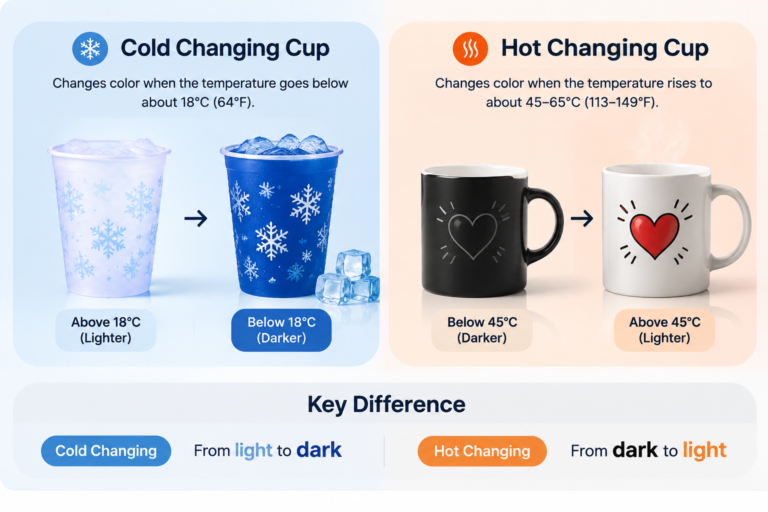
For color-changing drinkware, I pay special attention to temperature-sensitive pigment stability, dishwasher expectations, print adhesion, and packaging protection. Some buyers focus only on the effect at the sample stage. However, bulk production needs more control. The color-changing layer, base material, artwork, and usage temperature must work together.
This is why I see import rankings as only the first page of the sourcing story. A buyer may target the United States, Germany, Japan, or Australia, but the real success depends on matching the product to the correct customer group.
How Do Countries Importing Drinkware from China Affect Supplier Selection?
Many sourcing problems happen because buyers choose a supplier based only on price.9 This is risky in drinkware because different materials require different production controls.10 A good plastic cup factory may not be the right choice for ceramic mugs. A stainless steel bottle supplier may not be suitable for color-changing plastic drinkware.
Countries importing drinkware from China should guide supplier evaluation. Buyers should check whether the factory can support the required material, customization method, quality level, documentation, order quantity, inspection process, and delivery schedule for the target market.
Supplier capability should match the target country
From my experience as a China-based OEM/ODM drinkware manufacturer, serious buyers rarely ask only for a price. They usually ask questions such as:
- Can you make this material safely and consistently?
- Can you provide samples before mass production?
- Can you support custom colors, logos, and packaging?
- What is your MOQ?
- What inspection standard do you use?
- Can you provide material documents for buyer review?
- Have you made similar projects before?
For markets with stricter buyer requirements, documentation becomes more important. I always suggest that buyers verify certificates, test reports, factory audits, and compliance documents directly. A supplier can provide documents, but buyers should confirm whether they apply to the exact product, material, and destination market.
A practical supplier evaluation checklist
| Evaluation area | What I suggest buyers check |
|---|---|
| Material capability | Plastic, glass, ceramic, aluminum, stainless steel, or mixed-material production |
| Customization | Logo printing, color changing, coating, decals, packaging, molds |
| Quality control | Incoming material checks, in-process inspection, final inspection |
| Sampling | Sample lead time, color matching, artwork confirmation |
| Bulk order control | Capacity, defect handling, packing method, delivery planning |
| Documentation | Test reports, material declarations, audit files, certificates for verification |
| Communication | Clear quotation, technical feedback, realistic timeline |
I have seen projects move smoothly when the buyer shares the target country, sales channel, expected price range, and packaging requirements at the beginning. I have also seen delays when the buyer only sends a product photo and asks for the lowest price.
A reliable supplier should help buyers compare options. For example, if a buyer wants a low-cost promotional cup, plastic may be suitable. If the buyer wants a premium gift, stainless steel or ceramic may work better. If the buyer wants visual impact, color-changing drinkware can create a strong shelf or event effect.
The best supplier is not always the cheapest one. It is the supplier whose capability matches the product, country, compliance expectations, and delivery plan.
Frequently Asked Questions
What are the top countries importing drinkware from China?
The top countries often include the United States, Germany, Japan, the United Kingdom, Canada, France, the Netherlands, Australia, South Korea, and Mexico. The exact ranking depends on the data year, HS code, material category, and reporting source.
Does high import volume mean a country is the best market?
No. High import volume does not guarantee success for every drinkware product.11 Buyers should check material demand, price level, customer use case, sales channel, and compliance expectations before choosing a target market.
Which drinkware materials are commonly imported from China?
Common materials include plastic, glass, ceramic, aluminum, and stainless steel. Some buyers also source custom color-changing drinkware for promotions, retail campaigns, events, and branded merchandise.
How should I verify drinkware import data?
I suggest checking sources such as UN Comtrade, ITC Trade Map, national customs data, and professional trade databases. Buyers should confirm the HS code, year, product scope, and whether figures are import value, quantity, CIF, or FOB.
What should I ask a Chinese drinkware supplier?
You should ask about material capability, customization methods, MOQ, sample lead time, quality control process, packaging, production capacity, and documents available for verification. You should also share your target market and sales channel.
Conclusion
Top Countries Importing Drinkware from China is a useful topic, but I see it as a procurement tool rather than a simple ranking. The best market depends on product material, usage, price level, channel, and compliance needs. Buyers should verify public trade data, study market fit, and choose suppliers with matching manufacturing capability. If you are evaluating custom plastic, glass, ceramic, aluminum, stainless steel, or color-changing drinkware, I can help review your project requirements and suggest practical OEM/ODM options.
"Trade Statistics by Product (HS 6-digit) - WITS", https://wits.worldbank.org/trade/country-byhs6product.aspx?lang=en. Trade statistics from UN Comtrade or ITC Trade Map for China under drinkware-adjacent HS headings identify the principal partner countries by reported value or quantity, supporting the article's country list when the HS scope and year are stated. Evidence role: statistic; source type: institution. Supports: A trade database should show partner-country import or export values for China under drinkware-related HS headings and indicate whether the listed countries are among major destinations.. Scope note: Support is conditional on the selected HS codes and reporting year, because no single trade code captures all drinkware. ↩
"United Nations Commodity Trade Statistics Database (UN Comtrade)", https://www.unccd.int/resources/knowledge-sharing-system/united-nations-commodity-trade-statistics-database-un-comtrade. UN Comtrade and ITC Trade Map publish international merchandise trade statistics by reporter, partner, commodity code, year, value, and quantity, making them suitable sources for checking country-level import figures. Evidence role: general_support; source type: institution. Supports: The cited databases provide official or compiled international merchandise trade statistics that can be used to verify import and export values.. Scope note: The citation supports the suitability of the databases, not the accuracy of any particular ranking unless the exact query parameters are supplied. ↩
"Trade Statistics by Product (HS 6-digit) - WITS", https://wits.worldbank.org/trade/country-byhs6product.aspx?lang=en. The Harmonized System nomenclature classifies tableware and kitchenware under different headings according to material, which explains why drinkware cannot be measured through one universal HS code. Evidence role: definition; source type: institution. Supports: The Harmonized System classifies drinkware-like goods by material and product type across several headings.. Scope note: The classification support is indirect because tariff headings usually use broader terms such as tableware, kitchenware, or glassware rather than the marketing term drinkware. ↩
"HTS CHAPTER 69 CERAMIC PRODUCTS", https://www.usitc.gov/publications/docs/tata/hts/bychapter/1000c69.pdf. Official tariff schedules separate household tableware and related articles by material, including plastics, glass, ceramics, steel, and aluminum, supporting the claim that drinkware classification depends partly on material composition. Evidence role: definition; source type: government. Supports: Official tariff schedules should show separate headings for plastic tableware, glassware, ceramic tableware, stainless steel household articles, and aluminum household articles.. Scope note: The source may not label all examples as drinkware, so the citation supports the classification logic rather than each possible product design. ↩
"Tableware and kitchenware of porcelain or china imports by country", https://wits.worldbank.org/trade/comtrade/en/country/All/year/2021/tradeflow/Imports/partner/WLD/product/691110. Merchandise trade data for China under tableware and household-article HS headings, when compared with World Bank income classifications, show whether high-income economies account for a substantial share of reported destination markets. Evidence role: statistic; source type: institution. Supports: A trade-data source combined with country income classifications should show whether high-income economies are prominent destinations for China-made tableware and household drinkware categories.. Scope note: The evidence is contextual because household tableware categories can include products beyond drinkware. ↩
"CIF/FOB margins: Insights on global transport and insurance costs of ...", https://www.oecd.org/content/dam/oecd/en/publications/reports/2024/06/cif-fob-margins_daa81e46/469123ab-en.pdf. International merchandise trade-statistics guidance distinguishes CIF import values, which include cost, insurance, and freight, from FOB export values, which value goods at the exporting border; this difference can affect comparisons across trade datasets. Evidence role: definition; source type: institution. Supports: International trade-statistics manuals define CIF and FOB valuation and explain their use in import and export reporting.. ↩
"The re-export puzzle: how the OECD addresses the largest source of ...", https://www.oecd.org/en/blogs/2026/01/the-re-export-puzzle-how-the-oecd-addresses-the-largest-source-of-distortion-in-merchandise-trade-statistics.html. Statistics Netherlands describes the Dutch economy as having substantial re-export activity and a major logistics role in European trade, providing context for why the Netherlands may rank highly in import or export statistics. Evidence role: historical_context; source type: government. Supports: A Dutch statistical source should document the Netherlands' role in re-exports and European logistics, giving context for high trade rankings.. Scope note: This supports the Netherlands' general hub role, not a drinkware-specific re-export share. ↩
"Food Contact Materials - Regulation (EC) 1935/2004", https://www.europarl.europa.eu/RegData/etudes/STUD/2016/581411/EPRS_STU(2016)581411_EN.pdf. European Union food-contact-material legislation establishes requirements for safety, traceability, and, for some materials such as plastics, declarations of compliance, supporting the article's emphasis on documentation for European drinkware buyers. Evidence role: general_support; source type: government. Supports: EU food-contact rules require or encourage documentation, traceability, and declarations for materials intended to contact food or beverages.. Scope note: The citation supports the regulatory context rather than proving buyer behavior in every European transaction. ↩
"Assessing the Best Supplier Selection Criteria in Supply Chain ... - PMC", https://pmc.ncbi.nlm.nih.gov/articles/PMC9102987/. Supplier-selection literature generally treats price as one criterion among several, with quality, delivery performance, technical capability, and reliability also influencing sourcing outcomes. Evidence role: expert_consensus; source type: paper. Supports: Purchasing research should show that supplier selection commonly uses multiple criteria beyond price, including quality, delivery, capacity, and reliability.. Scope note: The citation supports general purchasing practice rather than documenting specific drinkware sourcing failures. ↩
"Food Packaging & Other Substances that Come in Contact with Food", https://www.fda.gov/food/food-ingredients-packaging/food-packaging-other-substances-come-contact-food-information-consumers. Food-contact-material regulations and good manufacturing practice guidance require controls over composition, processing, and compliance for materials intended to contact food or beverages, supporting the need for material-specific production controls. Evidence role: mechanism; source type: government. Supports: Food-contact material regulations or guidance should show that manufacturing controls depend on material composition, intended use, and safety requirements.. Scope note: The support is regulatory and process-oriented; it does not compare every drinkware material in a single experimental study. ↩
"International market segmentation - Wharton Faculty Platform", https://faculty.wharton.upenn.edu/wp-content/uploads/2012/04/7213_International_Market_Segmentation.pdf. Research on export market selection and international marketing treats market size as only one dimension of market attractiveness and emphasizes product adaptation, segmentation, and channel fit as additional determinants of commercial success. Evidence role: general_support; source type: paper. Supports: Marketing or export-market-selection research should support the principle that market attractiveness must be assessed alongside product fit, segmentation, channels, and customer requirements.. Scope note: The evidence is conceptual and does not test drinkware products specifically. ↩