
Choosing a drinkware manufacturer can feel risky when every supplier looks capable on paper. A large factory, polished showroom, and impressive certificate list may reduce concern at first. But if your order is produced elsewhere, or quality control is weak, problems can appear late. The solution is to evaluate how the supplier actually manufactures, controls, and delivers.
To choose a drinkware manufacturer, buyers should look beyond factory size, certificates, and price. The most important checks are where your order is really produced, who controls the core processes, and whether quality is managed daily through records, inspections, training, and traceability. A reliable supplier proves capability through process control, not promises.
I have worked with global buyers who care about factory standards, stable quality, and reliable delivery. Over time, I have learned that supplier selection is less about finding the biggest factory and more about finding the right production control system for your order.
Why Doesn’t a Large Drinkware Manufacturer Always Mean Strong In-House Production?
A large drinkware manufacturer may look safer because it has more workers, higher turnover, and a bigger production site. Buyers often assume this means the factory will make every order by itself. However, that assumption can create risk if the supplier’s real production arrangement is not transparent.
A large drinkware manufacturer does not always handle every order in-house. Many large factories prioritize long-term, high-volume, repeat orders for their own production lines and may outsource smaller, non-standard, or irregular orders. Buyers should confirm where their specific product will be made and who controls quality.
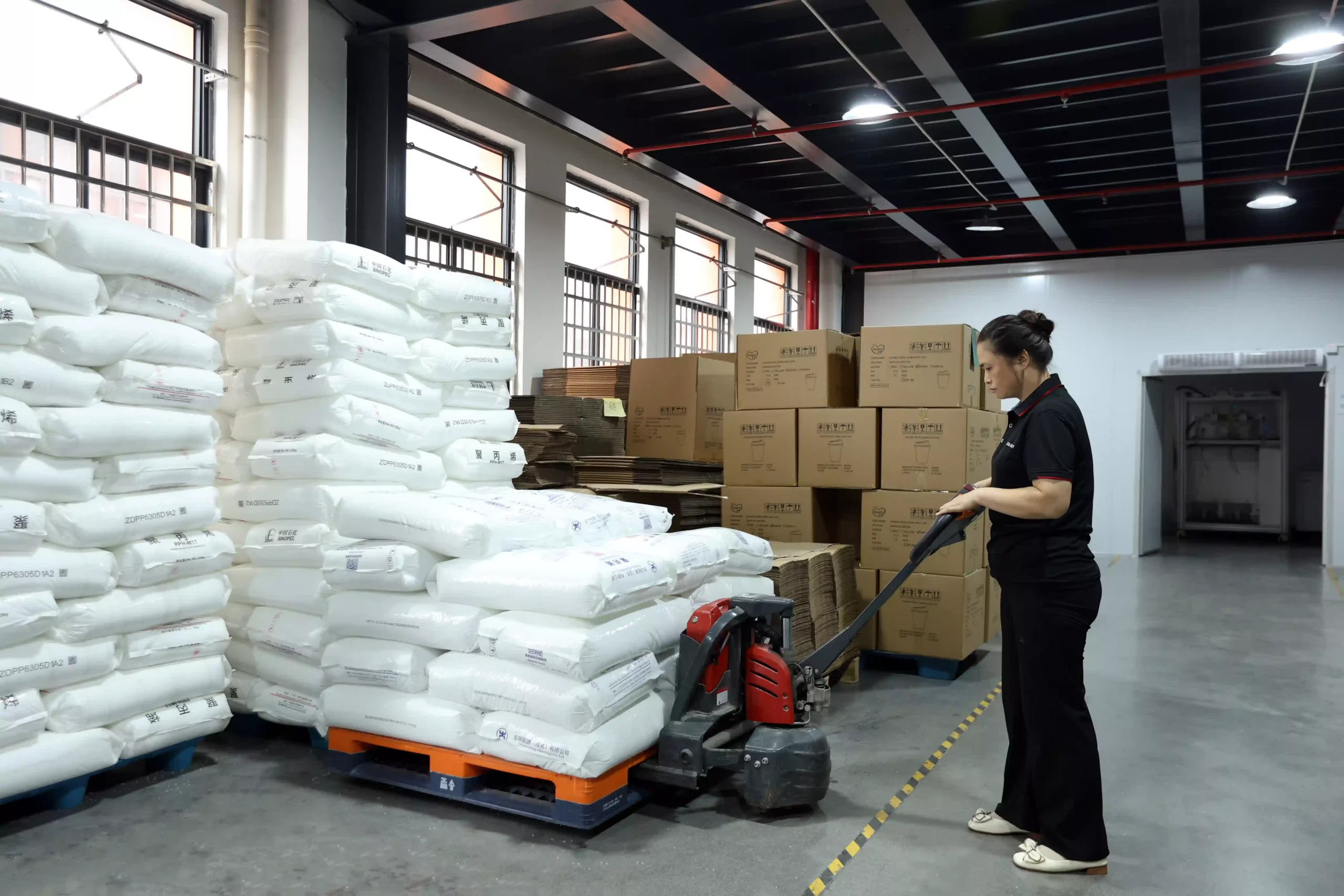
Factory Scale Is Only One Evaluation Point
Many procurement teams start supplier evaluation with visible indicators:
- Factory area
- Number of workers
- Annual turnover
- Production line quantity
- Export history
- Audit reports
- Certificates
- Customer references
These are useful signals. I do not ignore them. A stable factory with strong infrastructure usually has better resources than a very small workshop. However, these indicators do not fully prove that your actual order will be produced inside that factory.
I once spoke with a sales representative from a large listed stainless steel cup company in China. The company had strong public visibility and impressive manufacturing facilities. But I learned that many small, non-annual, and non-routine orders were handled by outside factories. Their own facilities mainly served three functions:
- Passing customer audits
- Showing manufacturing strength
- Producing large, stable, repeat orders
This business logic is easy to understand. A large factory has high fixed management costs. It needs continuous production volume to keep its equipment, managers, engineers, and workers fully utilized. If an order is small, unstable, or highly customized, outsourcing may be more economical.
Why Large Factories Outsource Some Orders
Outsourcing does not automatically mean the supplier is dishonest. In many manufacturing sectors, it is part of normal capacity planning. The issue is whether the arrangement is clear and controlled.
A large factory may outsource because:
- The order quantity is below its efficient production threshold.
- The product requires a process that is not part of its main line.
- The delivery time is too short for its current schedule.
- The customization is too complex for standard production.
- The customer is not yet a long-term strategic account.
For example, a factory that is excellent at stainless steel vacuum bottles may not be the best internal producer for a small batch of color-changing plastic tumblers. Another factory may specialize in that specific decoration process. In that case, the buyer should not only ask, “How big is your factory?” The better question is, “Where will my order be made, and how will you control it?”
What Buyers Should Verify Before Approval
When I help buyers think about supplier selection, I usually suggest a more direct checklist.
| Evaluation Item | Why It Matters | What Buyers Can Ask |
|---|---|---|
| Actual production site | Confirms where the order is made | “Will my order be produced in your own factory or another facility?” |
| Core process ownership | Shows who controls key quality points | “Which steps are done in-house?” |
| Subcontractor control | Reduces hidden production risk | “How do you approve and monitor outside factories?” |
| On-site inspection access | Supports transparency | “Can we inspect the production site during mass production?” |
| Quality responsibility | Avoids blame shifting | “Who signs off on final quality and shipment?” |
Factory size can show potential capacity, but it does not prove actual order control.
For procurement teams, this distinction is critical. If your product is used for retail, promotional campaigns, brand merchandise, or e-commerce sales, late quality issues can create chargebacks, customer complaints, and brand damage. A large supplier may still be a good choice, but the buyer should verify the production path before placing the order.
The Better Way to Judge Production Capability
A professional drinkware manufacturer should be able to explain its production model clearly. It should not avoid questions about subcontracting, outsourced processes, or actual line allocation. It should also provide reasonable documentation when needed.
Buyers can request:
- Process flow chart
- Production schedule
- Pre-production sample approval record
- Incoming material inspection record
- In-process quality control record
- Final inspection standard
- Packaging confirmation
- Traceability method by batch or order
In my experience, suppliers with real control do not fear these questions. They may not share every internal document publicly, but they can explain how the order moves from material sourcing to printing, packing, inspection, and shipment.
The core point is simple: the size of the factory does not mean your order will be produced there. A buyer should care about where the product is made, who manages the process, and who is responsible when a problem occurs.
Why Should a Drinkware Manufacturer Control Core Processes Even When Outsourcing?
A drinkware manufacturer does not need to own every production step to be reliable. Many good suppliers use outside partners for some materials or semi-finished products. The risk appears when nobody controls the final product, the inspection process, or the key workmanship that affects the buyer’s brand.
Outsourcing is not the main problem. Poor control is the problem. A reliable drinkware manufacturer may outsource cup bodies, accessories, cartons, or raw materials, but it should control key processes such as printing, decoration, final assembly, packing, inspection, and shipment responsibility.
Outsourcing Can Be Normal in Drinkware Production
Drinkware manufacturing often involves several materials and processes. One supplier may be strong in one area and cooperate with partners in another. This is especially common for OEM and ODM orders that include different product categories.
At Mugbaby, based on our own production management experience, we also outsource some cup bodies and supporting materials. These may include:
- Ceramic mugs
- Stainless steel cups
- Aluminum bottles
- Glass cups
- Straws
- Lids
- Color boxes
- Outer cartons
- Some packaging accessories
However, we keep key steps under our own control, especially printing, heat transfer, decoration, final packaging, and final quality checking. This matters because these steps often decide what the buyer and end consumer actually see.
A cup body may be technically acceptable, but poor printing can ruin the product. A lid may function well, but incorrect packing can cause customer complaints. A color box may look good, but wrong labeling can delay customs clearance or retail distribution.
Why Final Product Control Matters More Than Ownership
Some buyers ask whether a supplier owns every part of the production chain. I understand why they ask. They want reliability. But ownership alone does not guarantee control.
A factory may own equipment but manage it poorly. Another supplier may outsource some parts but control quality carefully. For small and medium-sized custom orders, the second supplier can sometimes be more practical.
The important questions are:
- Who controls the core workmanship?
- Who checks quality during production?
- Who handles final inspection before shipment?
- Who is responsible if defects are found?
- Who has the authority to stop shipment?
If a supplier cannot answer these questions clearly, the buyer should be careful.
Common Outsourcing Risks Buyers Should Understand
Outsourcing creates risk when the supplier treats it only as a purchasing activity, not as a managed production process. I have seen several issues that buyers often underestimate.
| Risk | What Can Happen | Buyer Impact |
|---|---|---|
| Sample substitution | Good samples are shown, but mass production differs | Approval becomes unreliable |
| Hidden defects | Defective goods are mixed into cartons | Higher complaint rate |
| Weak third-party inspection control | Inspectors cannot access real process details | Inspection misses root causes |
| Full inspection cost pressure | 100% checking becomes expensive and slow | Delivery delays and higher cost |
| Process changes without approval | Materials, colors, or methods change silently | Brand consistency problems |
In drinkware production, some defects are easy to see. Others are harder to catch at final inspection. For example:
- Logo color deviation
- Scratches under coating
- Uneven transfer printing
- Poor lid fitting
- Odor from materials
- Weak packaging protection
- Inconsistent color-changing effect
- Wrong barcode or retail label placement
If these problems are found only after mass production, the supplier may need to rework, repack, or remake goods. That costs time and money. More importantly, it can affect the buyer’s delivery commitment to their own customer.
Quality Should Be Prevented, Not Only Detected
Many buyers rely heavily on final inspection. Final inspection is useful, but it is not enough. It can catch visible defects, but it cannot fully replace process control.
A stronger approach includes:
- Incoming material inspection before production starts
- Pre-production sample approval before mass production
- First-piece confirmation at the beginning of the line
- In-process inspection during decoration and assembly
- Packing verification before cartons are sealed
- Final random inspection before shipment
- Corrective action records after problems occur
This method prevents defects earlier. It also creates a record of what happened. For B2B buyers, this record is valuable because it supports accountability.
What I Recommend Buyers Ask
When evaluating a drinkware manufacturer, I recommend asking about process ownership instead of only asset ownership.
Good questions include:
- “Which production steps are completed in your own facility?”
- “Which steps are outsourced?”
- “How do you qualify subcontractors?”
- “Do you inspect semi-finished goods before decoration?”
- “Who performs the final packing?”
- “Can you provide inspection records for similar orders?”
- “How do you trace defects back to a batch, worker, machine, or process?”
The supplier does not need to give a perfect answer. However, the answer should be practical and consistent. If the supplier says, “Do not worry, we control everything,” but cannot explain how, that is not enough.
The core point is this: do not only look at who owns the factory; look at who truly controls the finished product. For small and medium-sized custom drinkware orders, a professional factory that controls key production steps may be more suitable than a large factory that outsources your order without clear oversight.
Why Can’t Buyers Simply Pay More for a Higher-Quality Drinkware Manufacturer?
A higher price from a drinkware manufacturer does not automatically create better quality. Many buyers believe that if they pay more, the factory will pay more attention. Sometimes that is true. But if the supplier lacks a quality management foundation, extra profit may not change daily behavior.
Quality is built through management, not bought through price alone. A higher unit price can support better materials, slower production speed, or stricter inspection, but only if the drinkware manufacturer already has training, procedures, records, accountability, and continuous improvement in place.
Higher Price Does Not Automatically Change the Factory
Many buyers say, “This customer has high quality requirements, so we can pay a little more.” The intention is reasonable. Better quality often requires better materials, more careful production, longer inspection time, and stronger packaging. These things cost money.
However, I have learned that price is only one part of quality. A factory also needs the right management habits.
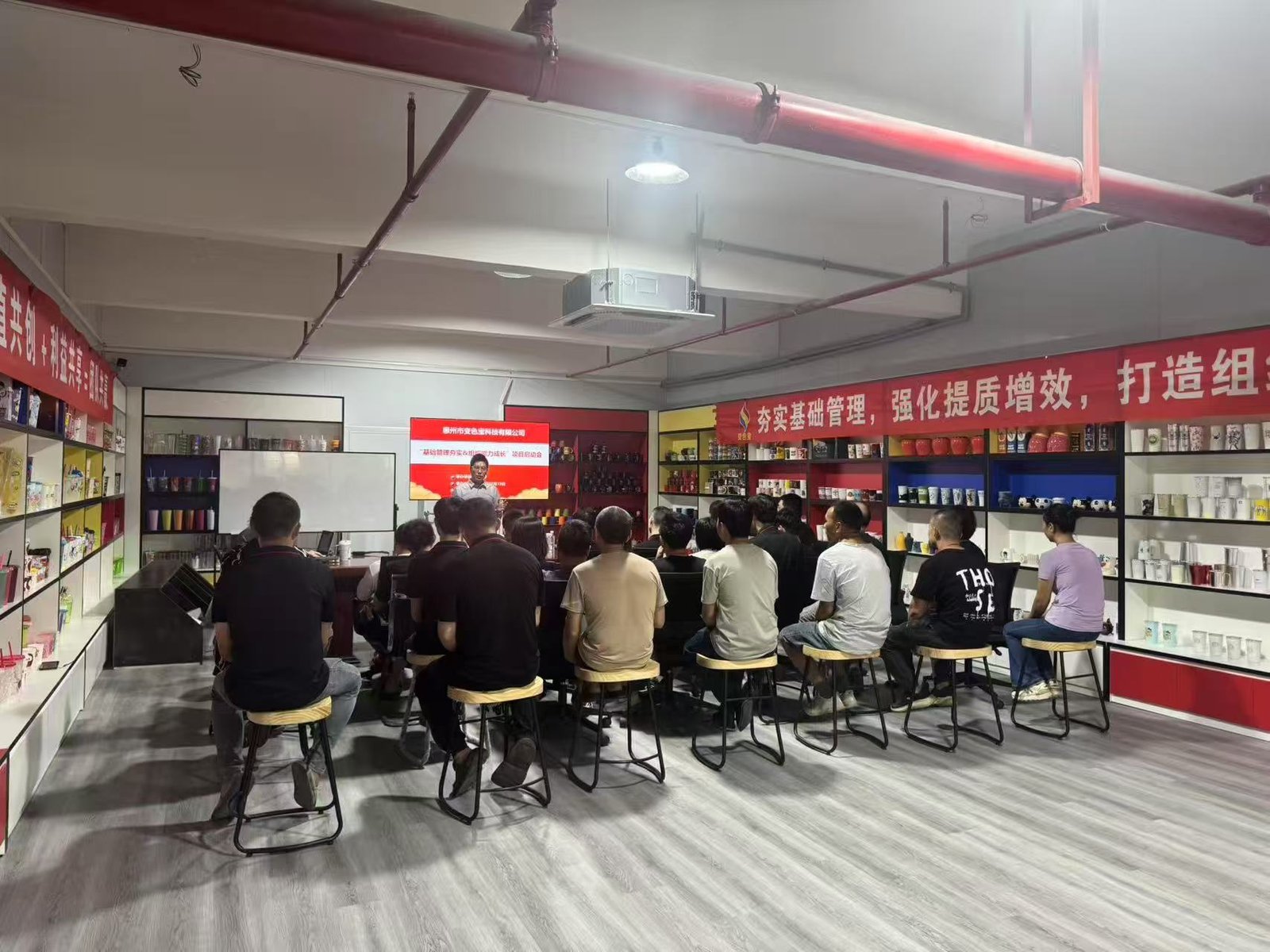
If workers are not trained to identify defects, a higher order margin will not suddenly improve their judgment. If supervisors do not check process standards, a higher price will not automatically make them more disciplined. If the factory has no traceability system, it cannot easily find out why a problem happened.
In other words, quality depends on the daily operating system.
What “Quality Is Built” Means in Practice
A good drinkware manufacturer does not wait until the final inspection to care about quality. It builds quality into each stage.
This includes:
-
Material selection
- Food-contact materials should match the buyer’s target market requirements.
- Buyers should verify relevant documents with qualified professionals when needed.
- Material consistency should be checked before mass production.
-
Process control
- Printing temperature, transfer pressure, curing time, and assembly methods should be controlled.
- Workers should follow approved samples and written standards.
- Supervisors should check first pieces and random pieces during production.
-
Worker training
- Operators should know what defects are unacceptable.
- Packing workers should understand customer-specific packing instructions.
- Quality staff should record problems clearly.
-
Inspection and traceability
- Inspection should happen during production, not only at the end.
- Defects should be recorded by type and batch.
- Corrective actions should be reviewed before repeat orders.
-
Continuous improvement
- The supplier should learn from complaints.
- The factory should adjust procedures when the same issue repeats.
- Management should use data, not only verbal reminders.
What Buyers Should Review Beyond Certificates
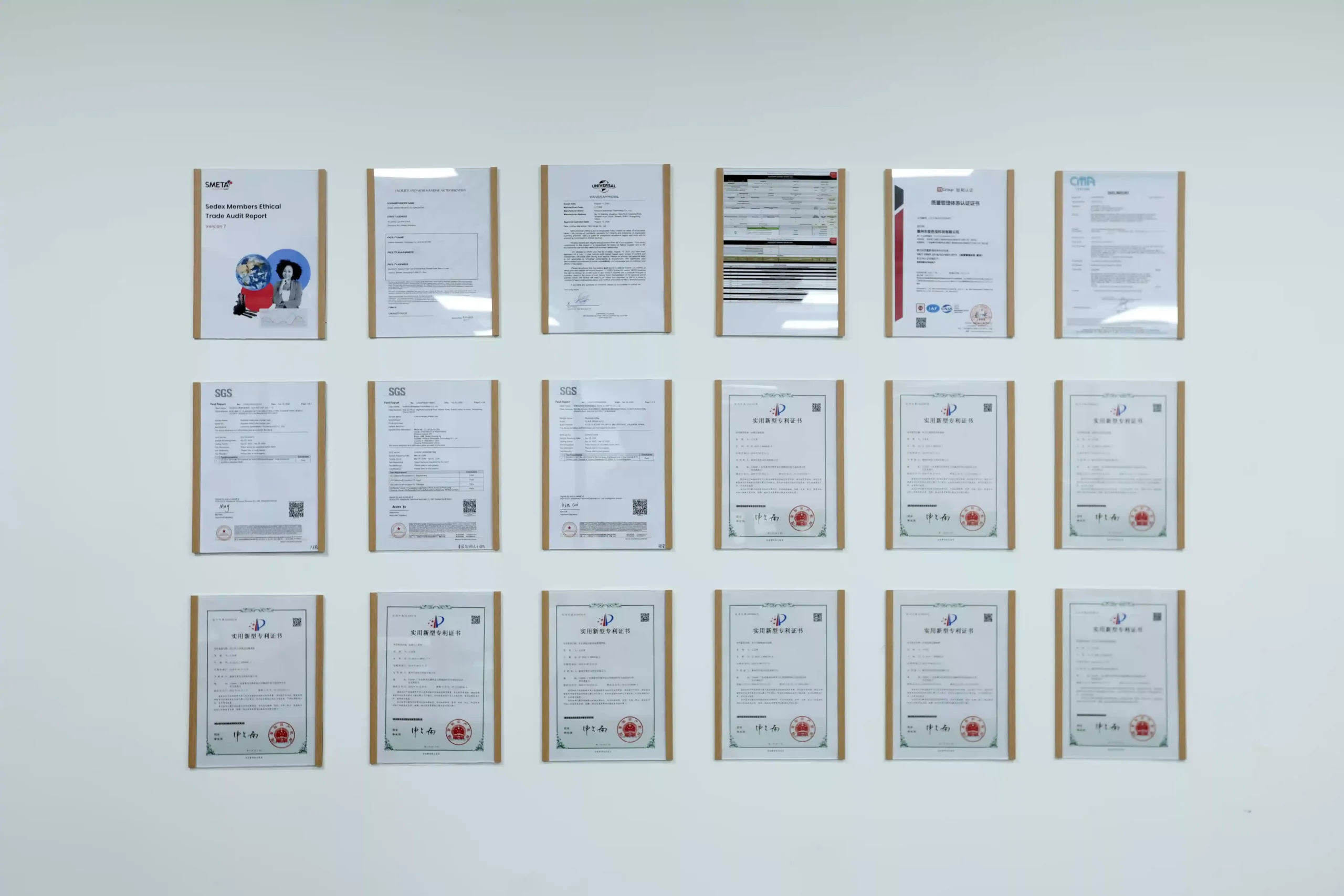
Certificates are useful. Audit reports are useful. Compliance documents can be necessary for many markets. However, buyers should treat them as documents to verify, not as a complete quality guarantee.
For product-specific safety, compliance, and regulatory decisions, buyers should work with qualified testing labs, compliance consultants, or internal quality professionals. A supplier can provide documents, but the buyer should confirm whether they apply to the exact product, material, market, and order.
Beyond certificates, buyers should review:
| Quality Evidence | What It Shows | Why It Matters |
|---|---|---|
| Production records | How the order is controlled daily | Shows real process discipline |
| Inspection checklists | What defects are monitored | Reduces subjective judgment |
| Defect rate records | Common quality problems | Helps predict future risk |
| Corrective action reports | How problems are solved | Shows improvement ability |
| Approved samples | Reference standard for production | Prevents misunderstanding |
| Packing instructions | Export and retail readiness | Reduces logistics claims |
| Complaint history | Past issue patterns | Shows supplier transparency |
I believe the most important question is not, “What do you promise for this order?” The better question is, “What do you normally do, even when the order is not special?”
Why Daily Habits Matter More Than Special Attention
Factories often say they will give special attention to an important order. I appreciate that attitude. But special attention is hard to maintain if it is not supported by a system.
For example, if a buyer requires low defect rates on a color-changing cup order, the supplier needs more than motivation. It needs:
- Stable color-changing ink or material
- Controlled printing or decoration conditions
- Clear visual inspection criteria
- Workers trained to identify uneven color effects
- A sample board for comparison
- Batch separation and traceability
- Final packing checks to avoid mixed goods
If these elements are missing, a higher price may only increase the supplier’s profit. It may not create better control.
Practical Supplier Questions for Quality Evaluation
When buyers evaluate a drinkware manufacturer, they can ask questions that reveal the supplier’s real quality management level.
Useful questions include:
- “What are the most common defects for this product type?”
- “How do you prevent those defects during production?”
- “Can you show an example of an inspection checklist?”
- “How do you train workers for custom printing orders?”
- “What happens if the first-piece sample is not approved?”
- “How do you record customer complaints?”
- “How do you prevent the same problem from happening again?”
A strong supplier can discuss defects openly. A weak supplier often says, “No problem,” too quickly.
Price Still Matters, But It Is Not Enough
I do not suggest choosing the cheapest supplier. Very low prices can create serious risks. A supplier may reduce material quality, rush production, use weaker packaging, or skip inspection. Buyers should be cautious when a quote is far below the market average.
However, the highest quote is not automatically the best quote either. The best value usually comes from a supplier that can explain how the price supports the production process.
For example, a professional quotation may reflect:
- Better raw materials
- More stable decoration process
- Extra inspection time
- Stronger packaging
- Lower defect tolerance
- More careful project management
- Reliable export documentation
The core point is clear: quality is the result of long-term management, not an accessory attached to a high-margin order. Buyers should not expect one profitable order to suddenly transform a factory that lacks a quality control foundation.
Frequently Asked Questions
What is the most important factor when choosing a drinkware manufacturer?
The most important factor is production control. Buyers should confirm where the order is made, which processes are done in-house, how outsourced steps are managed, and who is responsible for final quality. Factory size, certificates, and price are useful, but they do not replace process control.
Is outsourcing a bad sign in drinkware manufacturing?
Outsourcing is not always a bad sign. Many reliable suppliers outsource cup bodies, accessories, or packaging materials. The key issue is whether the supplier controls core processes, inspects semi-finished goods, manages subcontractors, and takes responsibility for the finished product.
Should I choose the largest drinkware manufacturer I can find?
Not always. A large factory may be suitable for big, long-term, repeat orders. But small or customized orders may be outsourced. Buyers should choose a supplier that fits their order type and can clearly explain actual production arrangements, quality control, and delivery responsibility.
Do certificates guarantee drinkware quality?
Certificates do not guarantee quality by themselves. They are documents that buyers should verify for the exact product, material, and market. Buyers should also review production records, inspection procedures, defect tracking, and corrective action systems before making supplier decisions.
How can I reduce quality risk before mass production?
Buyers can reduce risk by approving pre-production samples, confirming materials, reviewing packing methods, setting inspection standards, checking first-piece production, and requesting in-process quality updates. For application-specific compliance or safety decisions, buyers should use qualified testing and professional evaluation.
Conclusion
Choosing a drinkware manufacturer is not only about finding the biggest factory or accepting the highest promise. Buyers should confirm where the order is produced, who controls the core processes, and how quality is managed every day. In my experience, reliable results come from clear responsibility, practical inspection systems, and long-term production discipline. If you need OEM or ODM custom drinkware with controlled printing, packaging, and quality management, I would be glad to discuss your project requirements.